


17
DecIt is imperative to identify an ICU monitor stand or patient monitor stand that fits your facility’s needs for efficiency and safety. Moreover, not only should an efficiently designed stand hold your monitor, but it should also allow easy movement and organization for medical practitioners. It is here that we provide you with all necessary information before choosing an efficient stand for your hospital’s ICU/PCU.
What are ICU Monitor Stands and Their Benefits?
ICU monitor stands
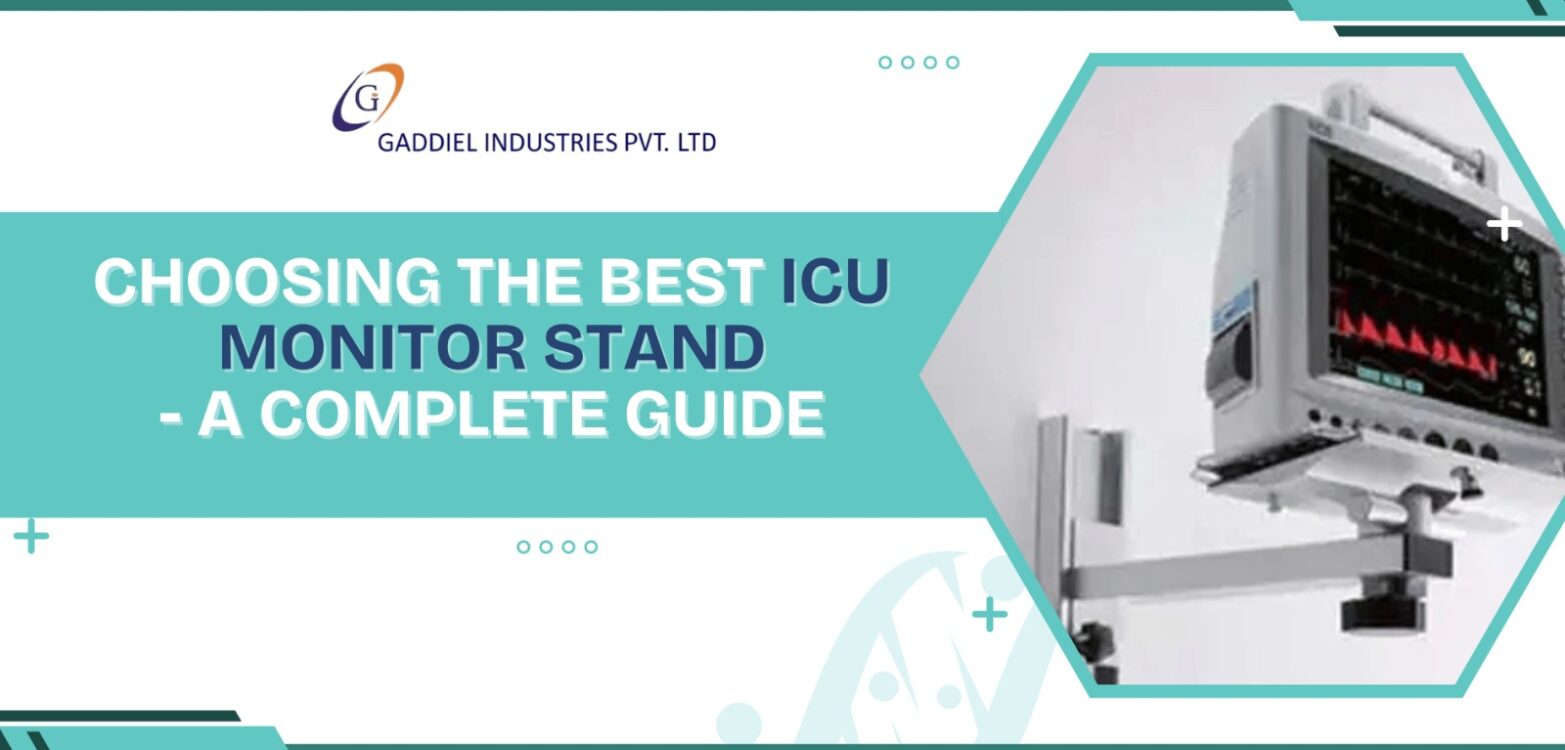
Typically, an ICU monitor stand refers to a carefully designed support structure meant for use within an ICU as a platform on which patient monitoring equipment can be placed. ICU monitor stands are made to be highly durable and capable of withstanding constant use while at the same time being highly mobile, thus creating a convenient platform on which vital sign monitors can be conveniently rested.
Why Does Having an Effective Patient Monitor Stand Matter?
Trustworthy patient monitor stands are imperative in efforts aimed at enhancing efficiency within ICUs. Healthcare professionals have to constantly relocate medical monitors without at the same time creating a mess; an efficient stand will make it easier compared to low-grade ones.
- Declutter and eliminate cable congestion
- Ensures monitors are properly positioned for easy readings
- Enhance patient safety during transfer
- Reducing risk associated with falling equipment and its possible damage
- Achieve better workflow with better ergonomics
- An ergonomic stand enables medical professionals to focus more on taking care of patients and less on handling equipment.
Important Parameters to Focus on When Considering an ICU Monitor Stand
1. Build Quality and Durability
A good ICU monitor stand should be made of durable materials like stainless steel or metal that has been powder-coated and should be capable of withstanding prolonged usage, frequent movement, and frequent disinfection procedures.
2. Mobility and Wheel Quality
Medical-grade casters with smooth-rolling wheels are vital for smooth procedures. You should look for 360-degree casters with brakes that provide stability throughout procedures.
3. Height Adjustability and Ergonomics
The adjustable poles and slanted platforms enable better observation for doctors and nurses who need access at different heights.
4. Cable Management System
Sanitation considerations for critical care are extremely essential. ECG, SPO2, NIBP, and power cables are made more manageable with stands that have hooks and channels to reduce accidents and related injuries.
5. Compatibility with Different Monitors
Your configuration should be set up with multiple monitors. It should be capable of handling multiple brands and versions of these monitors. Universal mounting plates or VESA compatibility would be an added advantage.
6. Stability and Safety Features
A stand with large bases, anti-tip features, and heavy-duty locks would make it stable and prevent it from tipping over, and this would be particularly important around a patient.
Various Types of ICU Monitor Stands Available Today
There are three main types of monitor stands commonly used in hospitals:
1. Mobile Monitor Stands
These stands have wheels that make it easy to move from bed to bed or from departments – an added advantage, given the dynamic nature of an ICU setting.
2. Fixed or Wall-Mounted Stands
These devices can be directly mounted on walls so as to optimize floor space utilization, particularly within ICUs with fewer mobility requirements. These devices make great solutions as they are directly mounted on walls.
3. Multi-Equipment
These advanced stands offer optimal organization solutions as they support multiple tools such as infusion pumps, monitors, and accessories within a single unit, thus reducing organization efforts at patient bedsides.
How Can You Choose an ICU Stand?
Below are some easy steps that will help you make your pick:
- Measure Your Space: You would prefer mobile stands for ICUs requiring more space and fixed stands for ICUs requiring smaller space.
- Fit monitor brand: It should be checked for compatibility before buying.
- Cost savings and safety enhancements: When examining the cost and safety components of any bike, having a sturdy frame, tip-resistant designs, and high-quality wheels is an absolute necessity.
- Ergonomic methods: Adjustable height and tilt make it more comfortable for staff.
- Long-term considerations: Although it may be more expensive to invest in a costly stand, less money will be paid for its maintenance and replacement.
Read Related – Medical Gas Systems: Safety Essentials & Guidelines
Conclusion –
By choosing an optimal stand for a patient monitor, hassles and risks associated with working environments will be eliminated. Conclusion An ICU monitor stand and tower is more than just a necessary piece of furniture; it plays an extremely important role in these types of facilities. To achieve optimal organization and mobility with regard to patient and hospital safety, it would be greatly advantageous for facilities to invest in high-quality stands with an emphasis on ergonomics and compatibility. Looking for ICU Monitor Stands That Meet the Needs of Your Healthcare Facility?
Find out high-quality ICU monitor stand options created specifically to match the ICU monitor stands that can best meet your needs so your medical staff can provide excellent patient service.