

MEDICAL GAS PIPELINE SYSTEM
- Home
- Medical Gas Pipeline System
MGPS for Hospitals
Medical Gas Pipeline System
Medical Gas Pipeline System (MGPS) is a crucial service in healthcare facilities, ensuring a safe, reliable and continuous supply of medical gases such as Oxygen, Nitrous Oxide, Medical Air, and Vacuum. This system eliminates the need for bulky gas cylinders at patient Bedside, reducing logistical challenges and enhancing patient safety.
The Medical Gas Pipeline System is designed in compliance with HTM 02-01, NFPA, and ISO standards, featuring high-quality pipelines, isolation valves, area gas alarms, and gas outlets strategically installed in modular OT setups, operation theaters, ICUs, and patient wards. It plays a vital role in life-supporting treatments, anaesthesia delivery, respiratory therapies, and other critical medical procedures.
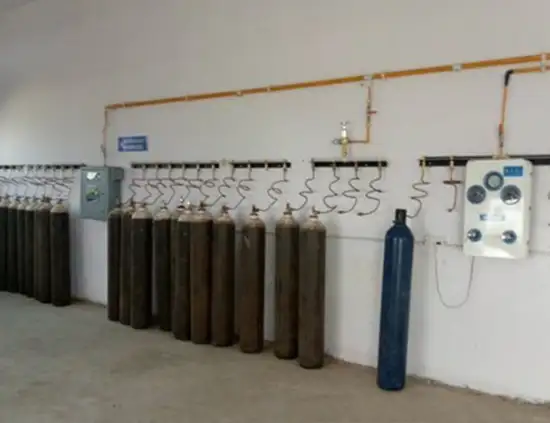
MGPS for Hospitals
Medical Gas Pipeline System with Safety and Performance
Medical Gas Pipeline System (MGPS) is an essential service of any ultra-modern healthcare infrastructure, responsible for safe and uninterrupted delivery of medical gases to the different departments. Delivering gases such as oxygen, nitrous oxide and medical air to the point of use, this system is integral for patient care from intensive care units to operation theatres.
Components Of Medical
Gas Pipeline System
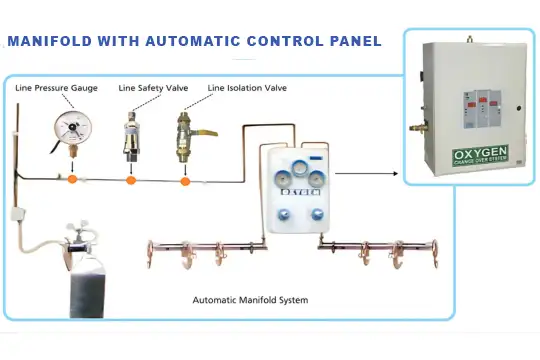
AUTOMATIC MANIFOLD CONTROL PANEL
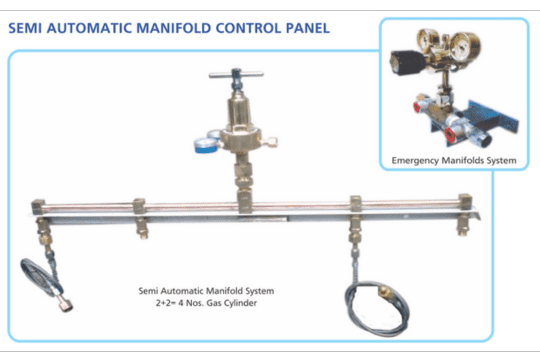
SEMI AUTOMATIC MANIFOLD CONTROL PANEL
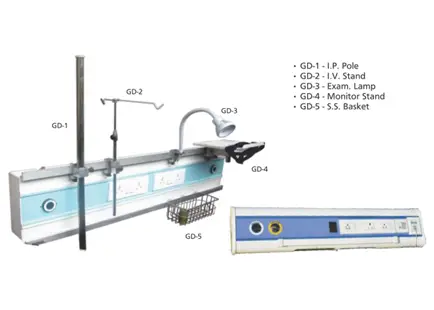
HORIZONTAL BED HEAD PANEL
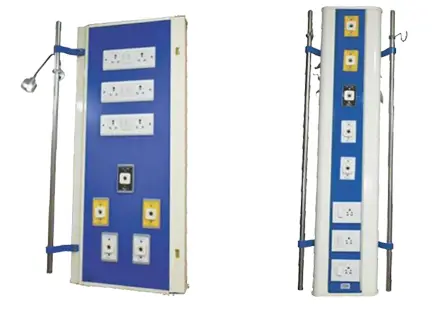
VERTICAL BED HEAD PANEL
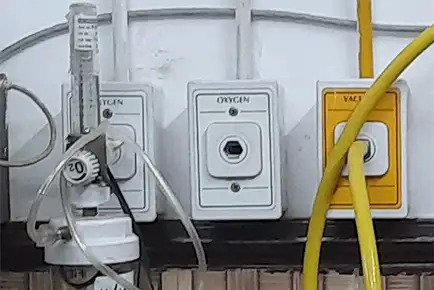
MEDICAL GAS OUTLETS
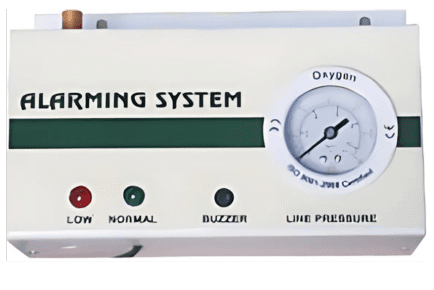
Analog Area Gas Alarm
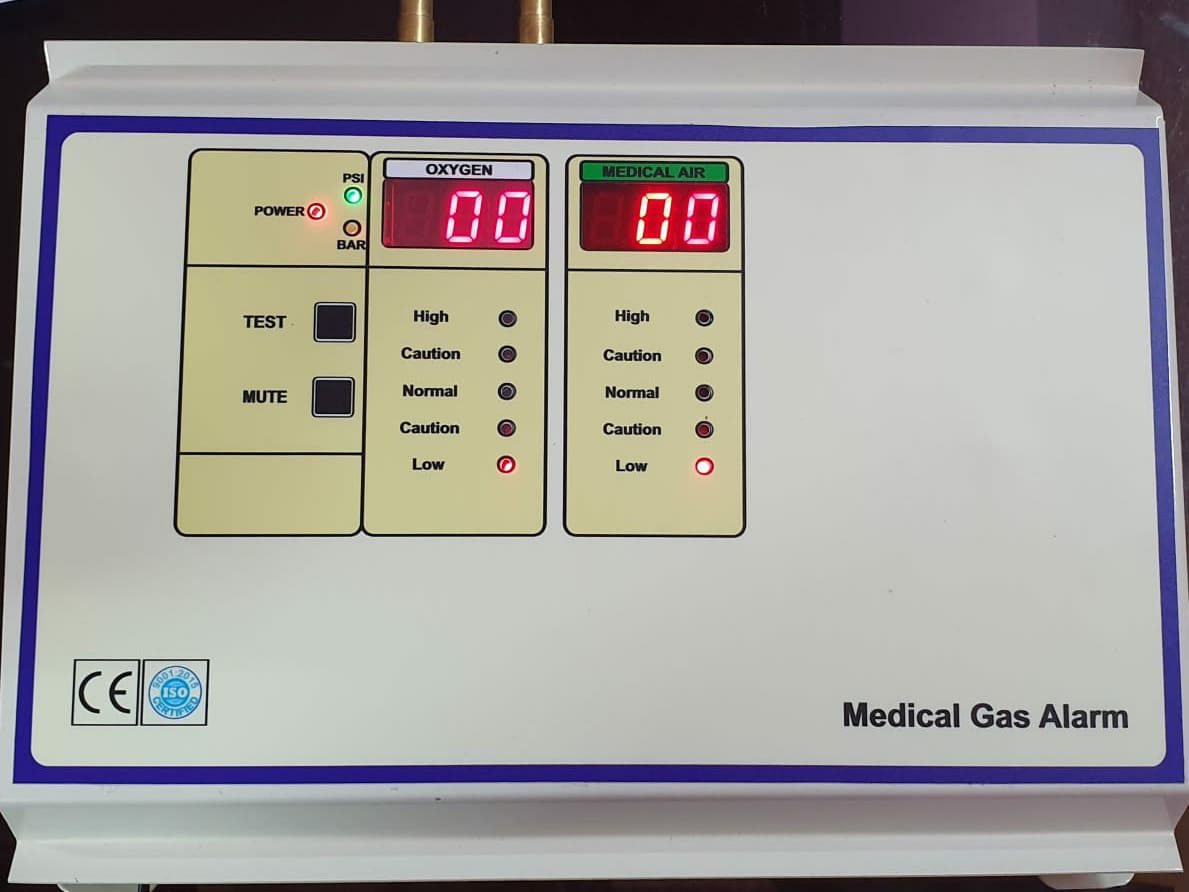
Digital Area Gas Alarm
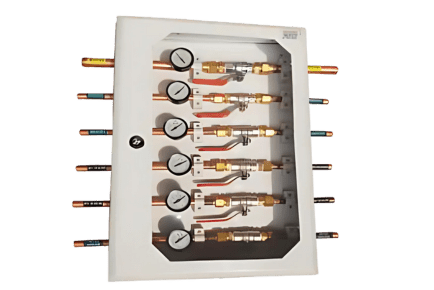
ZONAL VALVE BOX
The Zonal Valve Box are fully designed to suit multiple operational and requirement and ensure considering space for mounting. The Configurations of valve boxes are described.services – O,, N,O, Air, Vacuum (15, 15, 15,22 mm)3 services – O,, Air, Vacuum (15, 15, 22mm)2 services-O,, Vacuum (15, 22mm)5 services – O,, N,O, Air 4 Bar, Air 7 Bar, Vacuum6 services – O,, N,O, Air 4 Bar, Air 7 Bar, Co, Vacuum
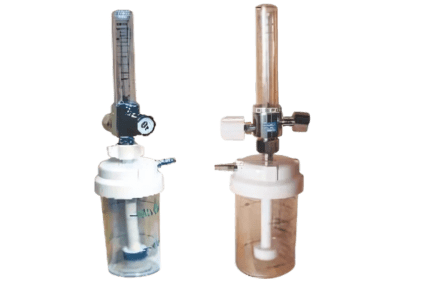
BPC FLOW METER
Black Pressure componsated flow meter made with chrome plated brass body. Graduated flow tube and cover made of polycarbonate, & unbreakable. Adujustable flow by needle valve (know) with micrometrical regulation. Humidifier bottle is made of unbreakble polycarbonate material and is autoclavable.
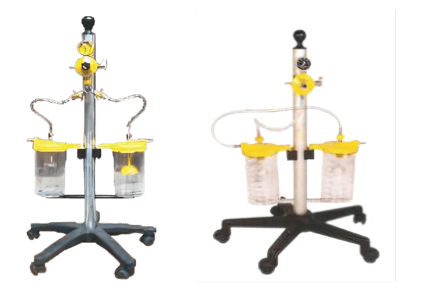
THEATRE SUCTION TROLLEY
The unit illustrated incorporates a vacuum regulator with vacuum gauge. (0-760 MM/HG). Two suction jars of 2000 ml capacity each (4000ml). A three way valve which allows use of either or both suction jars. The rugged structure is made of mild steel & fibre glass to forbear hard usage, & for attractive clinical appearance.Branches chasis is provided with castors for easy mobility.
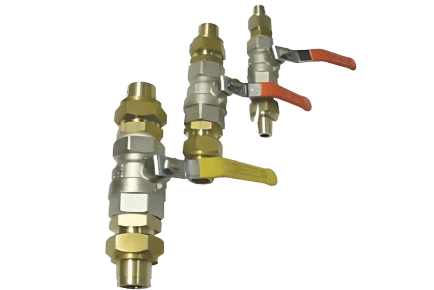
PIPELINE ISOLATION VALVE
ISOLATION BALL VALVE COPPER PIPE & FITTING PLASTIC SADDLES All Copper pipe made of phosphorous de-oxide, non arsenical copper as per BS 2871, Part 1, GD-VB-12 Table X (BS En1057)
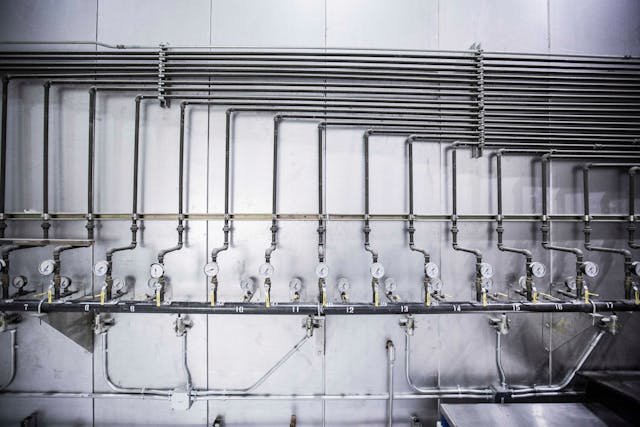
What is a Medical Gas Pipeline System?
A medical gas pipeline system is a centralised piping network that delivers medical gases economically from the source to various areas in the hospital. This means there are no more individual gas cylinders at each location, saving on safety and convenience while guaranteeing supply.
Medical gas pipeline system components
Gas Source Equipment
Comprises oxygen cylinders, liquid oxygen tanks or gas manifolds which is the main source.
Pipeline Network
According to the pending patent application, separate gas pipelines (typically made of seamless medical-grade copper) carry gases throughout various areas of a hospital.
Control Panels and Valves
Control pressure and flow, delivering gases safely.
Terminal Units (Outlets)
Installed at patient bedsides or operation rooms and allows for easy access to gases.
Alarm Systems
Keep an eye on pressure levels and inform the staff if there is a fault in the system or abnormal behaviour.
Vacuum System
It is utilized in suction treatment, including surgery and emergencies.
A medical gas pipeline system is a crucial part of modern healthcare facilities, designed to deliver lifesaving gases safely, efficiently, and continuously to areas where patients receive care. By swapping out individual gas cylinders for a centralized supply, this system guarantees a steady flow of Oxygen, Medical Air, Vacuum, Nitrous Oxide, and CO₂ to ICUs, operating theaters, and emergency rooms.
Key Features of a Medical Gas Pipeline System
- Central Gas Supply Units that ensure constant availability
- High-quality copper pipelines for precise distribution
- Zone valve boxes that allow for safe isolation during maintenance
- Terminal outlets are strategically placed at critical care points
- Alarm and monitoring panels for real-time pressure and safety checks
Benefits of Installing a Medical Gas Pipeline System
- Continuous and reliable gas flow for patient treatment
- Enhanced safety with automated alerts and regulated pressure
- Reduced handling and storage issues associated with gas cylinders, minimizing operational risks
- Compliance with global healthcare standards and safety regulations
- Improved workflow and optimized space in medical environments
Where MGPS Is Used?
- Hospitals and Multi-Specialty Clinics
- Surgical and Emergency Units
- Diagnostic and Dental Centers
Types of Medical Gases Used
You can handle all this the way you used to live it, fuelling (or not) your car with: Oxygen (O₂) – Required for respiration
- Nitrous Oxide (N₂O) – Commonly used as an anesthetic agent
- Medical Air — Provides respiratory & medical equipment support
- Carbon dioxide (CO₂) – Used in surgeries
- Vacuum – This is to suck things up and pull from fluid
A well-designed medical gas pipeline system is essential for ensuring safety, efficiency, and reliability, making it a vital component of any healthcare facility.
Upgrade your healthcare facility with advanced Medical Gas Pipeline Systems designed for safety, efficiency, and compliance. Our solutions ensure uninterrupted delivery of essential gases like oxygen, nitrous oxide, and compressed air across critical areas.
As trusted modular OT manufacturers, we also integrate essential technologies like a queue management system and nurse call system to enhance workflow, communication, and patient care.
Built to meet NABH and international standards, these systems minimize operational risks. Whether setting up a new hospital or upgrading existing infrastructure, our customizable solutions offer reliability, easy maintenance, and long-term performance for seamless healthcare operations.
Key Features of Medical Gas Pipeline System
Continuous Gas Supply
High Safety Standards
Corrosion-Resistant Materials
Centralized Monitoring
Easy Maintenance
Advantages Of Medical Gas Pipeline System
Improved Patient Care
Enhanced Safety
Operational Efficiency
Cost-Effective in the Long Run
Space Optimization
Applications of MGPS
- Operation theatres
- Intensive Care Units (ICUs)
- Emergency Rooms
- General Wards
- Neonatal Care Units
- Diagnostic and Laboratory Areas
How to Choose the Right MGPS?
- Compliance with standards (HTM or NFPA)
- Quality of Materials (medical-grade copper pipelines)
- Features for Safety (alarm systems and pressure regulators)
- Ease of Maintenance
- Expert Installation Support
The Importance of MGPS in Today's Healthcare
Frequently Asked Questions
A compilation of frequently asked questions providing concise information on installation, maintenance, safety protocols, troubleshooting, and service details.
Why is a gas pipeline system important in hospitals?
It ensures a continuous and safe supply of medical gases, eliminating the need for individual cylinders and improving patient care.
Which medical gases are supplied through the pipeline system?
Common gases include oxygen (O₂), nitrous oxide (N₂O), medical air, carbon dioxide (CO₂), and vacuum (suction).
Where is the medical gas pipeline system used in hospitals?
It is used in ICUs, operation theaters, emergency rooms, patient wards, and neonatal care units.
Can MGPS replace gas cylinders in hospitals?
Yes, MGPS reduces dependence on cylinders by providing a centralized and uninterrupted gas supply, enhancing efficiency and safety.
How often should the medical gas pipeline system be maintained?
Regular inspections, leak tests, and preventive maintenance are required to ensure the system operates safely and efficiently.
End-to-End Medical Gas Pipeline System Services
We can help you with:
- MGPS design reviews and gap assessments.
- Detailed BOQs and quotations for new hospitals and expansions
- Oxygen, medical air, vacuum and AGSS plant selection
- Installation, testing, commissioning and documentation
- Upgrades of existing systems for ICU, HDU and high-flow oxygen demand
Frequently Asked Questions
Q1. What gases are used in MGPS?
Q2 So why is copper used in the pipelines?
Q3. Is MGPS safe for hospitals?
Q4. Where is MGPS used?
Q5. Does it reduce operational costs?
Q6. Why is a gas pipeline system important in hospitals?
Q7. Which medical gases are supplied through the pipeline system?
Q9. Where is the medical gas pipeline system used in hospitals?
It is used in ICUs, operation theaters, emergency rooms, patient wards, and neonatal care units.
Q10. Can MGPS replace gas cylinders in hospitals?
Yes, MGPS reduces dependence on cylinders by providing a centralized and uninterrupted gas supply, enhancing efficiency and safety.
Q11. How often should the medical gas pipeline system be maintained?
Regular inspections, leak tests, and preventive maintenance are required to ensure the system operates safely and efficiently.
Q12. What oxygen flow should be allowed per ICU bed?
The HTM uses 60 L/min per bed space per circuit where high-flow ventilation is expected, and 10 L/min where it is not. Each outlet should be able to pass 100 L/min.
Q13. What are the three sources of supply?
Primary (the main supply), secondary (automatic backup) and tertiary (emergency reserve). All three should be planned for every gas through risk assessment.
Q14. What tests are needed before handover?
Pressure and leak tests, particulate tests at every outlet, cross-connection tests, flow performance tests, alarm tests and gas quality tests. Every component is tested, and results are recorded on B-forms.
Q15. What oxygen purity is required at the outlet?
At least 99.5% for liquid or cylinder oxygen, and at least 94% for PSA oxygen, along with limits on moisture, CO, CO2 and particles.