

28
JanIntroduction to Zones of Operation Theatre
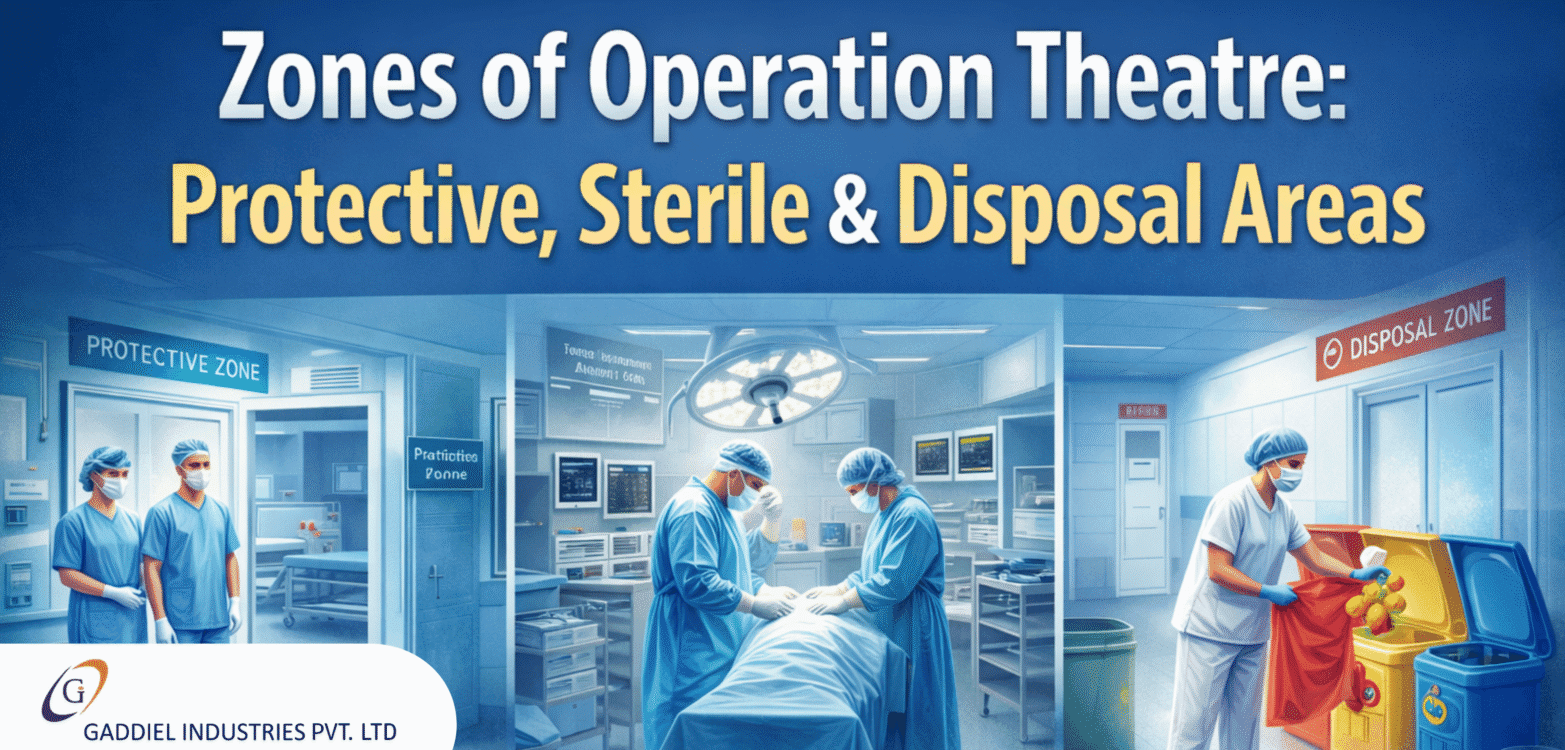
Zones of operation theatre are clearly defined functional areas within an OT complex designed to control movement, maintain sterility, and ensure safe disposal of biomedical waste. Proper OT zoning is essential for infection control, patient safety, and compliance with NABH standards. By segregating clean, sterile, and contaminated activities, hospitals can reduce surgical site infections (SSIs) and maintain an efficient workflow.
Operation theatre zoning plays a crucial role in modern hospital design and is mandatory for maintaining aseptic conditions during surgical procedures.
Importance of Zoning in an Operation Theatre
Effective zoning in an operation theatre helps prevent cross-contamination and ensures smooth coordination between staff, patients, and materials. Proper zoning:
- Minimizes the risk of surgical site infections (SSIs)
- Controls human traffic within the OT complex
- Ensures orderly movement of personnel, equipment, and patients
- Supports NABH and infection control guidelines
- Enhances operational efficiency and patient safety
Understanding the zones of operation theatre is essential for hospital administrators, planners, surgeons, nurses, and infection control teams.
Protective Zone in Operation Theatre
The protective zone in the operation theatre acts as a buffer between non-sterile hospital areas and the highly sterile OT environment. It protects inner sterile areas from external contaminants such as dust, microorganisms, and unauthorized personnel.
Areas Included in the Protective Zone:
- Doctors’ and nurses’ changing rooms
- Patient transfer and waiting areas
- Pre-operative holding areas
- Scrub rooms (in certain layouts)
- Clean corridors
Functions of the Protective Zone:
- Ensures staff change into OT attire before entering sterile areas
- Restricts unauthorized access
- Acts as the first barrier against dust and airborne contaminants
- Helps maintain air pressure differentials
Strict adherence to clothing, hand hygiene, and movement protocols is mandatory in the protective zone.
Sterile Zone in Operation Theatre
The sterile zone in the operation theatre is the most critical area where surgical procedures are performed. Absolute sterility must be maintained to prevent infections.
Components of the Sterile Zone:
- Main operation theatre rooms
- Sterile corridors
- Sterile instrument storage areas
- Scrub stations (as per design)
Essential Features of the Sterile Zone:
- Access limited to authorized and properly sanitized personnel
- Controlled temperature, humidity, and air pressure
- Laminar airflow or HEPA-filtered ventilation systems
- Non-porous, smooth wall and floor surfaces
Any breach of protocol in the sterile zone can directly increase infection risk. Therefore, strict aseptic practices and restricted movement are mandatory.
Read Related – Key Benefits of Modular Operation Theatres
Disposal Zone in Operation Theatre
The disposal zone in the operation theatre is designated for handling contaminated materials and biomedical waste generated during surgical procedures. This zone ensures safe waste management without compromising sterile areas.
Areas Covered Under the Disposal Zone:
- Dirty utility rooms
- Soiled corridors
- Biomedical waste collection points
- Equipment decontamination areas
Functions of the Disposal Zone:
- Prevents backflow of contaminated materials into clean zones
- Supports proper biomedical waste segregation
- Reduces exposure risks for healthcare workers and patients
- Ensures compliance with hospital waste management protocols
Color-coded waste segregation and timely disposal are essential practices in the disposal zone.
Workflow Between Operation Theatre Zones
Movement within OT zones follows a strict one-way workflow:
- Clean areas → Protective zone → Sterile zone
- Contaminated materials move separately to the disposal zone
This controlled workflow minimizes contamination risks and prevents the spread of infections within the OT complex.
Design Considerations for OT Zoning
When designing zones of operation theatre, hospitals should consider:
- Clear separation of clean and dirty pathways
- Adequate signage and access control systems
- HVAC zoning to maintain pressure differentials
- Easy monitoring and compliance auditing
Thoughtful zoning improves safety, efficiency, and long-term compliance with healthcare standards.
Frequently Asked Questions (FAQs)
How many zones are there in an operation theatre?
Typically, an operation theatre has three zones: protective zone, sterile zone, and disposal zone.
What is the purpose of the protective zone in operation theatre?
The protective zone acts as a barrier to prevent external contaminants from entering sterile OT areas.
Why is the sterile zone important in an operation theatre?
The sterile zone ensures an infection-free environment where surgical procedures are safely performed.
What type of waste is handled in the disposal zone?
The disposal zone manages contaminated instruments, biomedical waste, and soiled materials generated during surgery.
Read Related – Modular Operating Room: Layout, Design & Specifications
Conclusion
Well-defined zones of operation theatre—including the protective zone in operation theatre, sterile zone in operation theatre, and disposal zone in operation theatre—are essential for safe surgical practices. Proper OT zoning controls infection, improves workflow, and ensures compliance with NABH standards. Successful operation theatre zoning depends not only on design but also on staff discipline, regular training, and continuous monitoring to maintain high standards of patient care.