

28
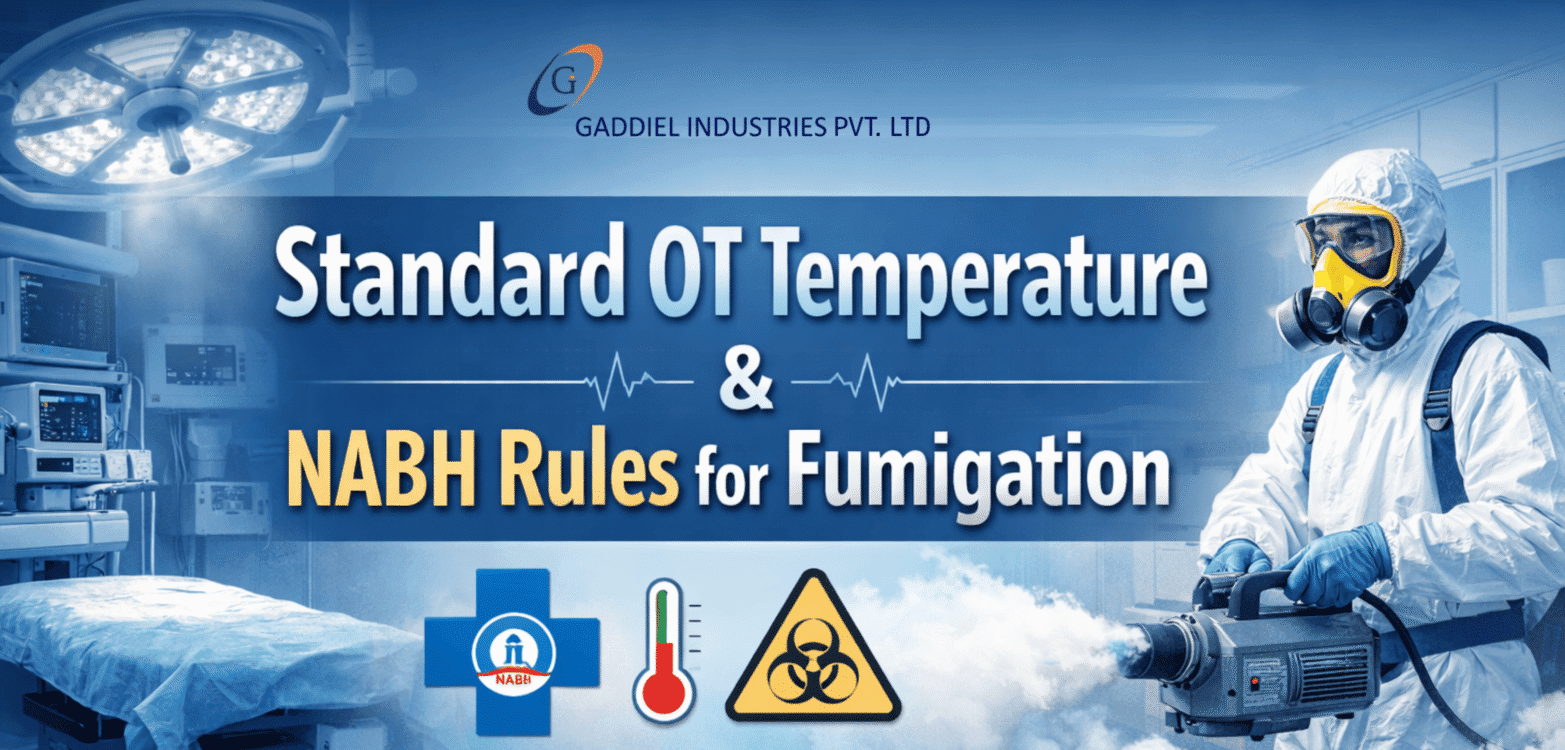
JanEnsuring that a particular set of environmental parameters always conforms to the norms in an operating theatre (OT) is crucial from the standpoints of patient safety, surgical accuracy, and infection control. Parameters such as normal OT temperature and humidity, adherence to NABH guidelines for OT fumigation, are significant in the prevention of SSIs & maintaining regulatory standards. We are going to discuss the ideal operating theatre temperature, humidity, and permissible fumigation methods according to NABH guidelines in this blog.
Why OT Temp/Humidity Matters So Much How does temp/humidity matter?
An operating room is a contained environment that may be influenced by slight changes in temperature or humidity. Surgeons prefer a comfortable environment to facilitate efficient procedures, and patients require protection from hypothermia or hyperthermia. Added to that, unmanaged areas are perfect breeding grounds for microbes – and the risk of infection.
That is why NABH and other masters of healthcare emphasizes on the strict monitorization of OT temperature and humidity.
Normal OT Temperature: Recommended Range
Normal OT temperature is generally maintained between 20°C to 23°C which is often ideal for most of the surgeries.
Why this temperature range matters:
- Reduces surgeons from sweating too much, which may affect sterility
- Minimises the risk of hypothermia in the patient
- Weevil - Reduces microbe growth in the OT environment
- “Optimizes operation of all types of medical equipment.
For specific surgery types (cardiac, neonatal operation), the temperature can be slightly adapted to clinical conditions but always maintaining a continuous controlled environment.
Read Related – Modular Operating Room: Layout, Design & Specifications
OT Temperature and Humidity Standards
Temperature alone is not enough. Temperature and humidity of the OT should be controlled for efficient control of infection.
Ideal OT Humidity Levels –
- Relative Humidity: 40% to 60%
- Benefits of controlled humidity:
- Prevention of static electricity which can damage sensitive devices
- Reduces airborne bacterial survival
- Keeps employees and patients comfortable
- Keeps your HVAC systems in good working condition
Dry conditions can generate static electricity, while moist conditions can give rise to bacteria and fungi. Therefore, the effective monitoring is important using calibrated sensor.
Role of OT Environment in HVAC System
Today’s OTs are equipped with sophisticated HVAC systems that control temperature, humidity, air changes per hour (ACH) and pressure differentials – all required for maintaining an acceptable level of cleanliness in OTs. Laminar airflow technology is particularly advantageous for maintaining a sterile field by providing a flow of clean, filtered air over the surgical region.
A well-designed HVAC system ensures:
- Stable operation theatre temperature
- Uniform humidity distribution
- Steerage air curtain for protection from contamination
- Compliance with NABH norms
- NABH Guidelines for OT Fumigation
NABH OT fumigation guidelines intention to clear OT of micro organisms as much as possible to reduce risk of infections. Fumigation is generally performed after OT commissioning, major maintenance and intermittently for infection control purposes.
Key NABH-Compliant Fumigation Practices:
Fumigation should be performed: Before commissioning a new OT, following extensive civil or HVAC working In accordance with hospital infection control policy. Approved Methods NABH allows fumigation using:
- Virtual slide Formalin (Routine and traditional technique, nowadays it’s not so preferred)
- Hydrogen Peroxide Fogging (widely recommended)
- Eco-friendly, residue-free disinfectants
- Pre-Fumigation Checklist
- OT must be sealed properly
NABH has focus laid on documentation. Hospitals must maintain logs for:
- Temperature and humidity readings were recorded by OT staff every day
- Fumigation schedules and methods used
- Microbiological test reports
- Corrective measures in the event of deviations
An audit process can also serve as a useful tool for the attainment of ongoing compliance and patient safety.
Read Related – Classification of Operation Theater – Design, Function, and Level
Conclusion
Holding the usual temperature in OT, and balancing the OT temp-humidity ratio while following fumigation and NABH guidelines should have a prerequisite mandatory condition of any healthcare institution that seeks quality accreditation and non-infective surgeries. A well-managed OT not only safeguards the patient, but improves surgical efficiency and compliance with regulation.
Source:- NABH Hospitals can attain Safety, Credibility and NABH Readiness in the long term by investing in the right kind of HVACs, Monitoring Devices and Standard Fumigation Protocols, provisional products & services.