


12
MarIn modern HVAC systems, especially used in commercial buildings, hospitals, malls, offices, and industrial buildings, an Air Handling Unit (AHU) is considered to be one of the most vital components. It is in-charge for the circulation, filtration, cooling and conditioning of air to achieve the desired indoor air quality and temperature.
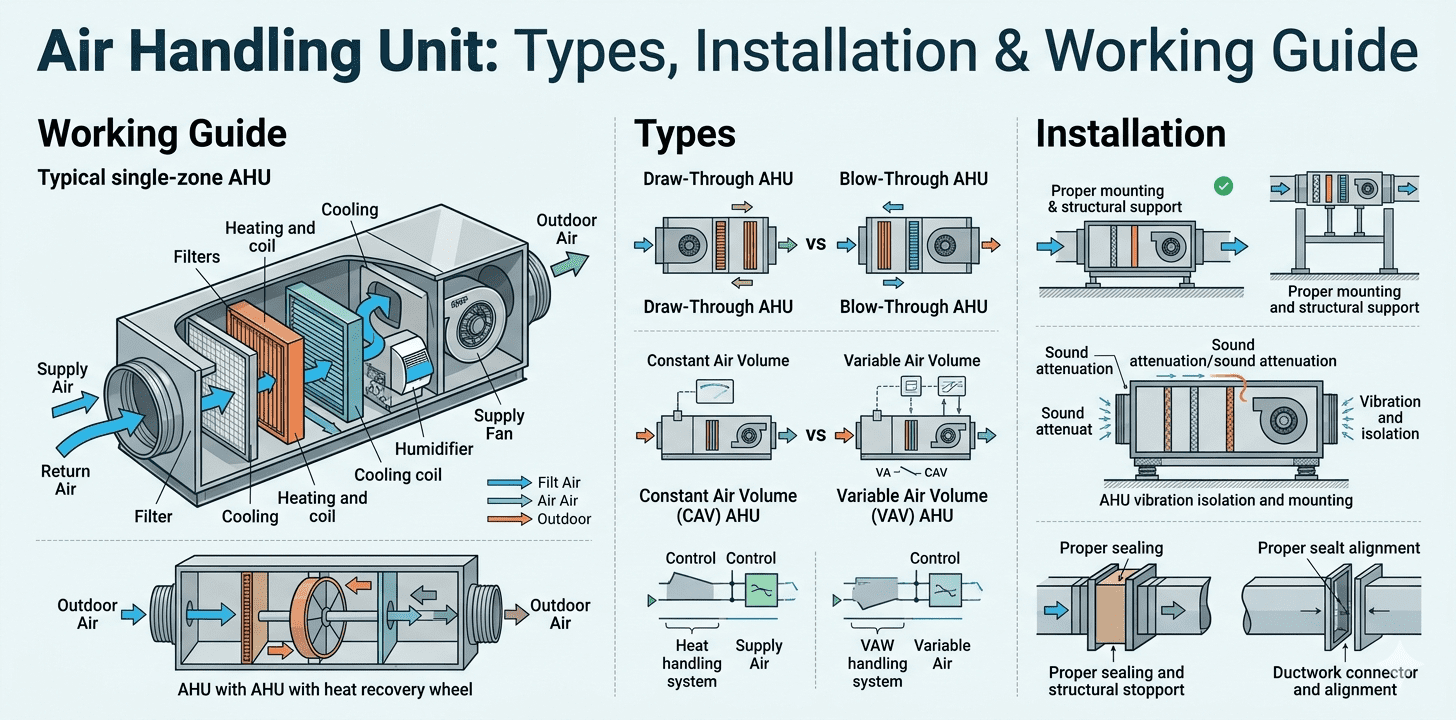
Air handling unit: types, installation and working mechanism understanding the air handling unit and its functionality will take you a long way in helping the facility managers/engineers and building owners maintain climate control and energy performance in the facility positive management of climate change effects is critical for the sustainable development of urbanization.
This is your ultimate guide to the air handling unit system — not overly technical but practical knowledge.
What is an Air Handling Unit?
An air handling unit (AHU) is a central component of HVAC systems that is used to condition and distribute air as a part of heating, ventilation, and air conditioning (HVAC).
It usually contains a few different parts:
- Blower or fan
- Cooling and heating coils
- Air filters
- Dampers
- Humidifiers or dehumidifiers
- Mixing chambers
Air handling units primarily pump in outside or recirculated inside air, filter the contents, heat, cool or humidity the air, and introduce the air through ducts throughout a building.
AHUs are widely used in:
- Hospitals
- Shopping malls
- Airports
- Data centers
- Office buildings
- Industrial plants
AHU systems with good design enhances the air quality, energy efficiency, and comfort level within indoors.
Read Also – MGPS Full Form in Hospital And Its Meaning
Types of Air Handling Unit
The following types of air handling unit systems are available according to the various requirements of the building, air flow capacity required for the building and installation conditions.
Packaged Air Handling Unit
A packaged air handler unit (ahu) is one in which all the components are packaged in one casing Features
- Compact design
- Easy installation
- Best used for small to medium sized buildings
Common Uses
- Offices
- Retail stores
- Small commercial buildings
This one is used where space is a crunch and fast installation is required.
Modular Air Handling Unit
It is composed of sections or modules that can be put together according to the needs of the project.
Features
- Customizable configuration
- Higher airflow capacity
- Flexible design
Common Uses
- Large commercial buildings
- Hospitals
- Industrial plants
The modular nature of AHUs is also prevalent; allowing engineers to adjust airflow systems according to the size and ventilation requirements of the building.
Rooftop Air Handling Unit
A rooftop air handling unit sits on the roof of buildings and distributes the air through ducts.
Features
- Saves indoor space
- Easy access for maintenance
- Integrated HVAC functionality
Common Uses
- Shopping malls
- Warehouses
- Large office complexes
Custom Air Handling Unit
A custom air handling unit, or custom AHU, is an air handling unit specifically built for a specific building that needs airflow control, filtration look at this site, or humidity control, among other features.
Features
- Designed for unique environments
- Advanced filtration systems
- Precise airflow control
Common Uses
- Laboratories
- Pharmaceutical industries
- Clean rooms
These units provide incredibly clean air and help control the environment.
How Air Handling Unit Works
Air Handling Unit – Working An air handling unit works on a systematic airflow process.
Step 1: Air Intake
An AHU will pull in outside air or return air indoors via the vent intake.
Step 2: Air Filtration
The air goes through filters, which purify it from dust, pollen, bacteria, and other impurities, increasing indoor air quality.
Step 3: Heating or Cooling
That air passes over cooling coils or heating coils, depending on the required temperature.
Cooling coils reduce air temperature.
In cold weather, heating coils heat the air.
Step 4: Humidity Control
Some air handling units also include humidifiers or dehumidifiers to ensure that the air has the correct moisture content.
Step 5: Air Distribution
The last stage in the process is that the blower fan blows the conditioned air through duct systems to different rooms or zones.
This cycle repeats itself as needed, providing continuous flow of air, comfort, and ventilation.
Read Also – Maximizing Patient Engagement Using Healthcare CRM
Air Handling Unit Installation Guide
Efficient and long-lasting performance of such a system can only be guaranteed if proper handling unit installation has been carried out.
- Location Selection
- Select a place to install it that offers:
- Adequate ventilation
- Easy maintenance access
- Structural support
The air handling unit (AHU) needs to be adequately hooked up to air ducts to transfer conditioned air evenly throughout the building.
Poor duct design can lead to:
- Air leakage
- Energy loss
- Uneven cooling or heating
- Electrical and Control Setup
Conclusion
An air handling unit is a critical component of modern HVAC systems, especially in controlled environments like modular OT (Modular Operation Theatre) setups, where maintaining sterile air quality and precise temperature control is essential. It ensures proper air circulation, temperature regulation, and improved indoor air quality. Understanding the types of air handling unit systems, their working principles, and correct installation methods helps improve building efficiency, patient safety, and occupant comfort.
FAQs
What is an air handling unit?
An air handling unit (AHU) is a component used to regulate and circulate air as part of a heating, ventilating, and air-conditioning system.
Different Types of Air Handling Unit
Some of the common types of air handling unit include packaged AHU, modular AHU, rooftop AHU, custom AHU etc.
Air Handling Units (AHUs) are utilized in?
Air handling units are essentially used in hospitals, offices, malls, air ports and industrial buildings.
Activity of an air handling unitHow does an air handling unit function?
An air handling unit draws in air, cleans it, then heats or cools it with heat-exchange coils and sends it through ducts.
What are the advantages of installing an air handling unit?
Installation of air handling units in an appropriate manner guarantees the right airflow and maximizes energy advantage while enhancing existing equipment life.
How regular is maintenance of an AHU?
Even if you make use of an AHU system, its inspection and maintenance should be on your schedule every 3–6 months for good measure.