

16
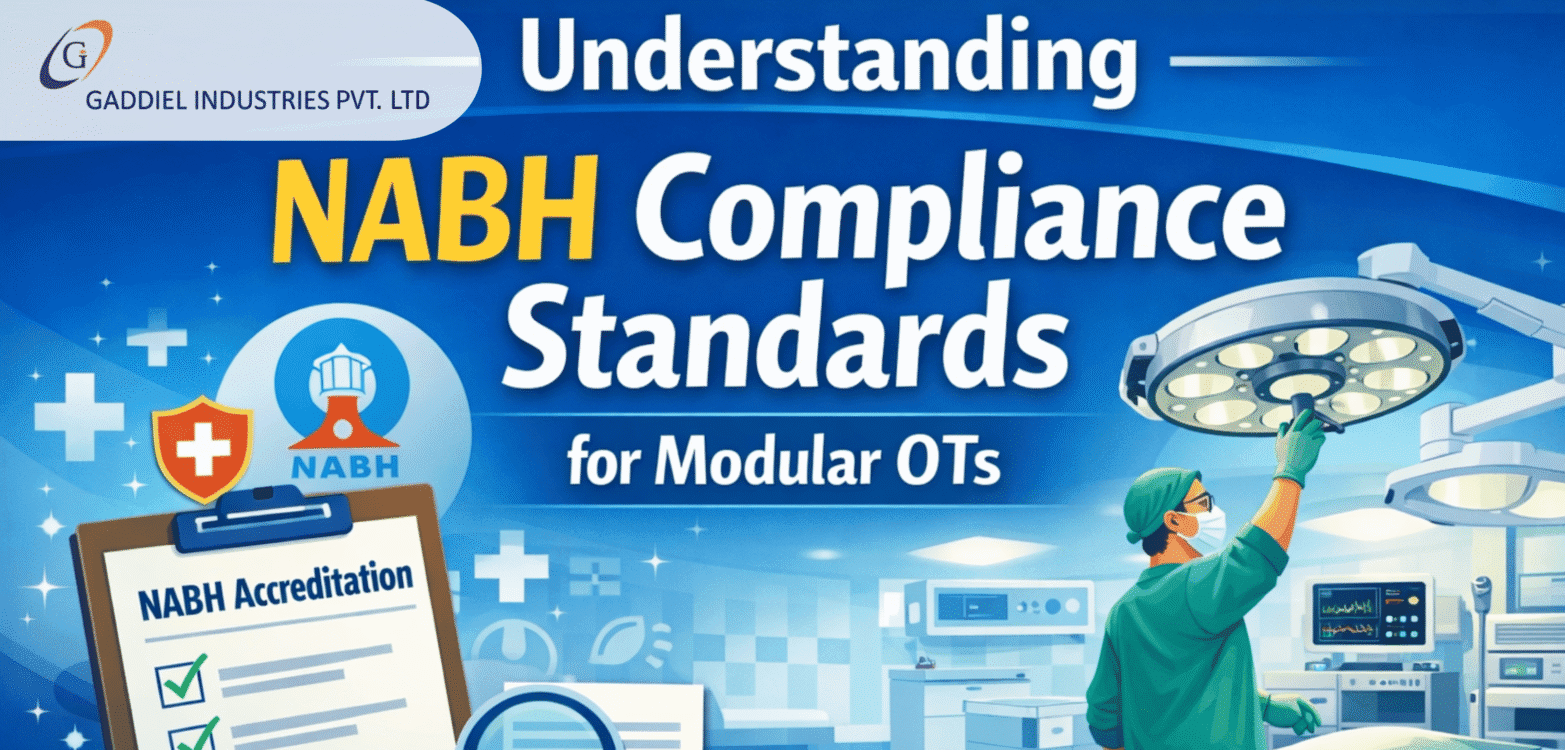
FebThe National Accreditation Board for Hospitals & Healthcare Providers (NABH) plays a pivotal role in ensuring high standards of care in healthcare facilities across India. NABH compliance is essential for various aspects of healthcare delivery, especially within Modular Operating Theaters (OTs). These standards are established to guarantee both patient safety and quality of care, making it imperative for healthcare providers to integrate them into the design and construction processes of Modular OTs.
The NABH standards specifically highlight several critical areas. Firstly, patient safety is paramount, as the OTs must be designed to prevent any adverse events during surgical procedures. This includes ensuring proper access to medical supplies, maintaining a sterile environment, and adhering to specifications regarding the layout and equipment placement within the theater. Compliance with these standards reduces risks associated with surgery and fosters an environment that prioritizes patient wellbeing.
Secondly, infection control is another significant facet of NABH compliance. Modular OTs must incorporate features such as air filtration systems, easy-to-clean surfaces, and effective waste disposal mechanisms. These elements not only help in preventing hospital-acquired infections but also contribute to the overall efficiency of healthcare delivery. Regular maintenance and environmental monitoring are necessary to ensure that the standards are upheld continuously.
The facility management aspect of NABH standards emphasizes the significance of operational efficacy and resource management within healthcare institutions. Modular OTs are expected to be equipped with clear protocols and guidelines for daily operations, ensuring that the healthcare team is well-trained and equipped to respond to emergencies. By adhering to NABH compliance standards, healthcare facilities can foster a climate of excellence that supports both patient care and staff safety, ultimately leading to improved healthcare outcomes.
Read Related – MGPS Full Form Explained: Hospital Equipment & Components
Key Design Elements for Modular OTs
Designing a NABH compliant Modular Operating Theatre (OT) necessitates a comprehensive understanding of various critical elements that contribute to its effectiveness and safety. One of the primary aspects is spatial configuration, which involves the optimal arrangement of surgical spaces to facilitate both staff efficiency and patient care. The layout must promote a clear separation between sterile and non-sterile areas, ensuring that the surgical environment maintains the necessary hygiene standards.
Another essential consideration is traffic flow within the Modular OT. The design should allow for smooth movement of surgical staff, patients, and equipment, minimizing the risk of contamination. A well-planned traffic flow enables personnel to move quickly to the required areas without unnecessary congestion, thus contributing to timely surgical procedures and overall operational efficiency.
Incorporating designated sterilization areas is of utmost importance in the design of Modular OTs. These zones should be strategically located to ensure immediate access to sterilized instruments while maintaining a controlled environment. The design must also allow for the easy decontamination of surfaces and equipment, supporting adherence to NABH standards of infection control.
The layout of medical equipment within the Modular OT is another crucial design element. It should not only be ergonomic for the surgical team but also ensure that all necessary tools are readily accessible during procedures. Innovative design solutions can integrate storage necessities without compromising space, thereby creating a streamlined workflow for healthcare professionals.
Finally, a patient-centric approach to design plays a fundamental role in meeting accreditation standards. Modular OTs should be designed with consideration for patient comfort, offering adequate space for family presence, visual privacy, and a calming environment. When healthcare facilities prioritize both professional functionality and patient needs, they create an OT that not only complies with NABH standards but also enhances the overall healthcare experience.
Construction Considerations for NABH Compliance
Constructing a modular operation theater (OT) that complies with the National Accreditation Board for Hospitals & Healthcare Providers (NABH) standards necessitates meticulous planning and execution. The selection of materials holds paramount importance, as it directly impacts infection control and patient safety. For instance, materials used for walls, floors, and ceilings must possess inherent infection-resistant properties, contributing to a sterile environment. Additionally, these materials should comply with relevant safety regulations, ensuring that they can withstand the rigors of clinical use while providing an aesthetically pleasing environment.
Another critical factor in the construction of NABH compliant modular OTs is soundproofing. Effective sound insulation helps minimize noise disturbance during surgeries, which is essential for maintaining a focused surgical environment. Utilizing sound-absorbing materials can reduce external noise intrusion, fostering an environment conducive to concentration and precision in surgical procedures.
Moreover, air quality is a vital consideration in the construction process. An efficient air ventilation system plays a crucial role in safeguarding patient health by ensuring a constant supply of filtered air. This involves the incorporation of advanced environmental control systems that monitor and regulate air quality, temperature, and humidity levels. It is crucial for these systems to adhere to NABH guidelines, as they directly affect the overall sterilization and hygiene standards within the OT.
Finally, the necessity for ongoing maintenance and adaptability cannot be overstated. Regular inspections and monitoring of systems are essential to ensure continued compliance with evolving NABH standards. The adaptability of modular designs allows for future updates and enhancements to meet changing regulations without requiring extensive renovations. This flexibility proves beneficial for healthcare facilities aiming to maintain accreditation and uphold the highest standards of patient care.
Training and Operational Protocols for Staff
Training and operational protocols for staff in NABH compliant modular operation theaters (OTs) are critical for maintaining safety and the quality of care. The implementation of these protocols begins with comprehensive training programs aimed at educating the healthcare team on NABH standards. Such programs should be designed to cover the necessary compliance practices that directly impact patient outcomes and operational efficiency.
Regular training sessions play a significant role in reinforcing knowledge and skills among staff members. These sessions must address various aspects of NABH compliance, including sterilization techniques, waste management, and infection control. Emphasis on emergency procedures is imperative, ensuring that all personnel are prepared to respond effectively to situations that may arise during surgery. Simulation exercises, alongside theoretical knowledge, can enhance staff readiness and confidence when dealing with real-life scenarios.
Read Related – Standard OT Temperature & NABH Rules for OT Fumigation
Additionally, continuous monitoring of operational practices is essential to uphold the standards set forth by NABH. This involves the establishment of routine checks and assessments that not only evaluate compliance adherence but also identify areas where improvement is needed. Leadership within the healthcare team plays a pivotal role in fostering a culture of compliance and safety. Leaders must prioritize open communication about the importance of NABH standards and encourage staff members to express concerns and suggestions related to operational practices.
By promoting an environment that values ongoing education and adherence to protocols, healthcare organizations can not only ensure their modular OTs are compliant but also advance overall patient safety and satisfaction. The collective commitment to these practices from every team member is essential in achieving sustained compliance within the dynamic healthcare landscape.