


28
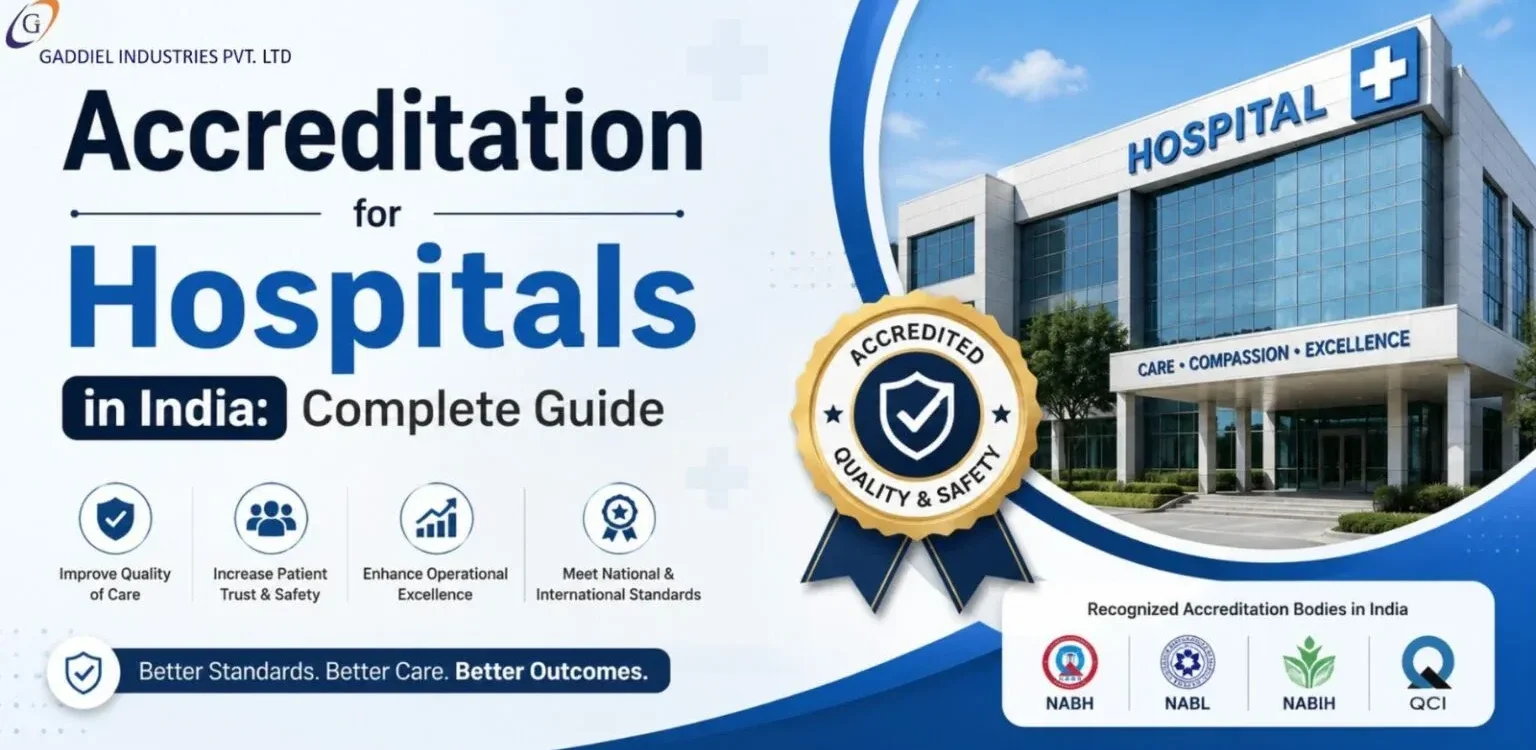
AprWellness and patient safety have become, in a high competitive health care environment, a must-have — not an add on. And here is where hospital accreditation plays a major role. It acts as a benchmark for healthcare organizations to measure their performance and demonstrate their pursuit of excellence. This guide is a comprehensive overview of what accreditation in India is all about, its relevance and significance today and for generations to come,if you are thinking of achieving accreditation for hospitals in India.
What is Hospital Accreditation?
The accreditation of the hospital is a systematic evaluation by which an organization measures its service delivery against predetermined standards for quality and safety. Everything from patient care protocols to infrastructure, hygiene and staff competence is subject to these standards.
Both internationally (by Joint Commission International) and in India (by National Accreditation Board for Hospitals & Healthcare Providers). These bodies guarantee that hospitals comply with best practice and always provide improvement of the service.
Why Hospital Accreditation Matters?
India’s fast-growing economy healthcare as this sector is going to grow we need a higher level of standardization.
Here’s why it is crucial:
Safety of in-Patient: Accredited hospitals abide by stringent Hospital safety/infection control measures.
Standardized Treatment: Guarantee standardized medical practices
Better Reputation: inspires confidence in patients and partners
Operational Efficiency: Enhances the management of hospitals.
Medical Tourism Boost: International accreditation draws global patients.
In India, there are three Z- accredited hospital types:
Read Also This: AI in Healthcare: Revolutionizing the Medical Field
National Accreditation
India is more extensive among national accreditation for hospitals which is also easier to access.
- Designed for Indian healthcare settings
- Cost-effective and practical
- Acknowledged by insurance providers as well as the government
- International Accreditation
International accreditation for hospitals that are determined to be globally prominent.
Based on global healthcare standards, Ideal for medical tourism. Need for an elaborate infrastructure with well-defined Preventive Maintenance.
Core Standards Required for Accreditation
Hospitals must pass a number of quality thresholds to gain accreditation:
- Patient Care & Safety
- Proper diagnosis and treatment systems
- Infection control protocols
- Emergency preparedness
- Infrastructure & Hygiene
Step-by-Step Accreditation Process
Accreditation is a structured process; this involves juggling planning and execution:
Application Submission
Here hospitals apply to an accreditation body with figures and documents.
Gap Analysis
An internal review finds domains requiring change
Implementation Phase
Hospitals upgrade their processes, develop their teams and improve the infrastructure.
Pre-Assessment
Trial evaluation tests readiness for final inspection.
Final Assessment
Experts do a full on-ground assessment.
Certification
Accreditation is awarded if all standards are met.
Ongoing Monitoring
Regular audits ensure continued compliance.
Read Also This: Is Nurse Call System Mandatory for NABH Accreditation?
Benefits of Hospital Accreditation
For Hospitals:
- Strong brand image
- Increased patient trust
- Better operational control
- Higher staff satisfaction
- Competitive advantage
For Patients:
- Safe and reliable treatment
- Reduced medical errors
- Better hospital experience
- Transparent healthcare services
Challenges Hospitals May Face
Accreditation for hospitals has its rewards, but also some snags:
Capital Cost: Infrastructure upgrades can be expensive
Waiting Time: Three months to even longer for process completion
Change Management: People may default to old systems
Effort Never Ending: Discipline in keeping those standards
But long term, the benefits far outweigh those challenges.
Practical Tips for Successful Accreditation
- Conduct a comprehensive gap analysis
- Staff Training and Awareness
- Maintain clear and updated documentation
- Prioritize patient-centric care
Hospital accreditation in India: the way forward
Accreditation is becoming a requirement rather than a discretionary item, with patients more aware and healthcare standards continuing to rise. Hospitals are being influenced toward standardized care systems by government initiatives, along with insurance requirements.
Accreditation for hospitals will sometimes be a must for the future, especially if they are looking to expand or lure international patients.
Conclusion
Beyond a certificate, accreditation is the quality seal of continuous improvement of hospitals. It enables a realm of growth, trust, and international recognition for healthcare providers. It helps patients as it quintessence the quality and authenticity of the treatment.
An Accreditation for Hospitals in India will be an important part of this evolution of the Indian healthcare system and enable a safer and more efficient future.
FAQs
What is hospital accreditation?
It is a quality assessment system by which hospitals are confirmed to be compliant with safety and care standards.
Is accreditation compulsory in India?
No, but very highly recommended for authority and growth.
What is the duration for accreditation?
It can last anywhere from months, depending on how prepared one is.
Is National accreditation better than International accredited?
National is for most hospitals and international suits global expansion.
Does accreditation improve patient care?
Yes, it is a game changer for safety, quality and patient experience.