


22
AprLet’s discuss AI in healthcare in this modern era of the medical field.
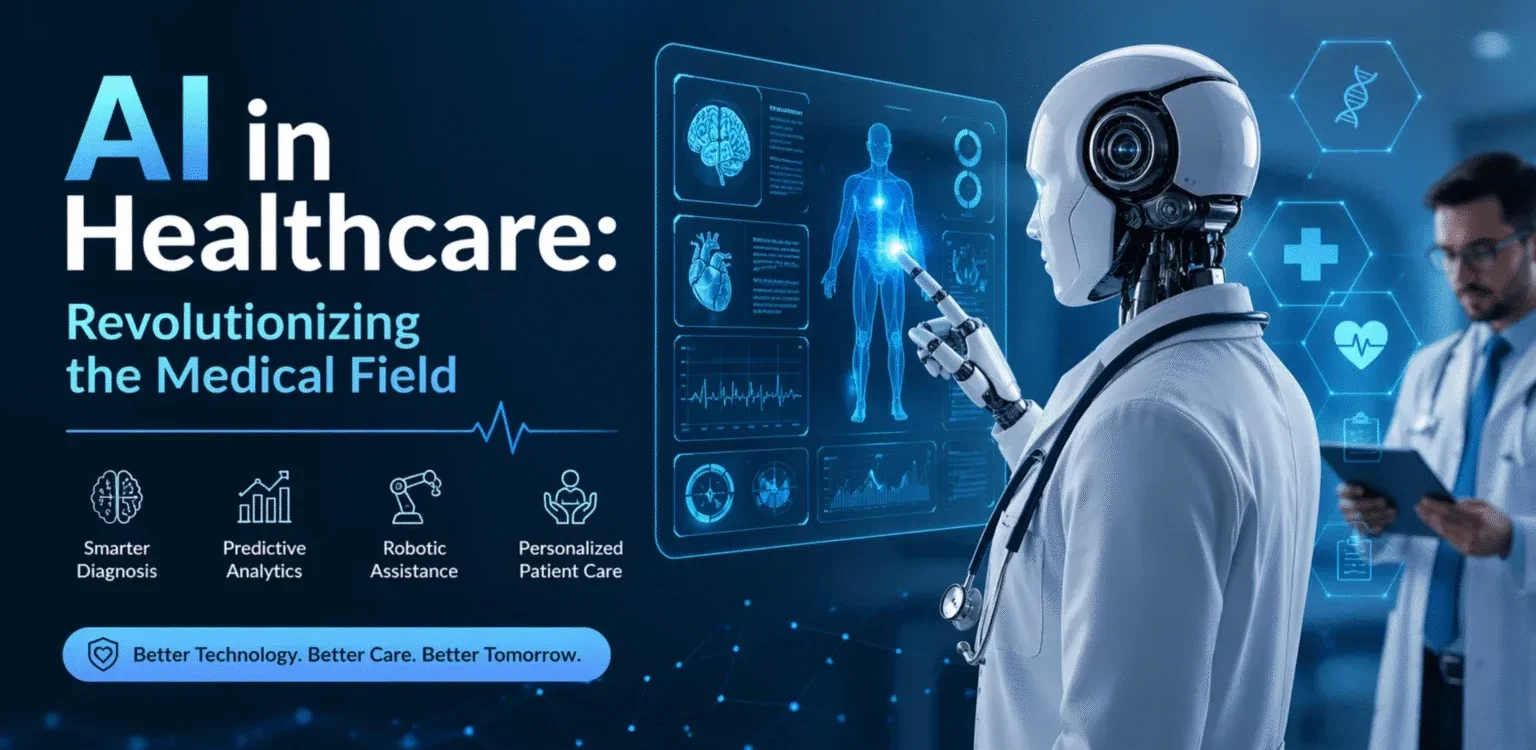
We are entering a new era of healthcare in which technology is not supportive anymore — it is at the center of decision-making and patient care. While there are many innovations disrupting the status quo — none more so than AI in healthcare. With everything from predictive diagnostics to smart treatment planning, the future of artificial intelligence in healthcare is rapidly approaching, and it is quick, it is accurate, and it is tailor made.
What Is AI in Medicine Exactly?
To encapsulate, AI in medicine is the application of algorithms with capability that can process large datasets of medical data. These systems model the way humans think, based on historical data but do it at a much faster speed and power.
So what does this mean specifically for the technology of AI in health care?
- Recognize patterns in complex datasets
- Learn from previous clinical outcomes
- Provide decision support to doctors
- Automate repetitive healthcare tasks
This aid of artificial intelligence is assisting professionals at delivering good results at a much faster rate.
Read Related – Maximizing Patient Engagement Using Healthcare CRM
Changing the Practice of Medicine Through AI in Healthcare
Smarter Disease Detection
Perhaps the most useful gift of AI to healthcare is its capacity for the early detection of diseases. AI models are capable of scanning medical images, lab results, and patient histories in a manner that captures subtle features that may elude the eye of humans.
This is especially beneficial in disease states such as:
- Cancer detection
- Cardiovascular diseases
- Eye disorders
- Neurological conditions
When it comes to treatment, early identification (which is one of the advantages of using artificial intelligence in healthcare) makes a big difference in treatment success rates.
Data-Driven Personalized Care
Contemporary patients deserve personalized solutions. This is made possible by AI in medicine analyzing personal medical records, genetic dispositions and lifestyles.
Some other ways that doctors can use AI in the medical field are:
- Customize treatment strategies
- Forecast Patients’ Responses to a one of two therapy
- Reduce unnecessary medications
This tailored method improves safety and efficacy alike.
Revolutionizing Drug Innovation
The average drug development time in the traditional scenario takes several years and involves huge cash outflow. AI capabilities have already started to expedite this process by more quickly selecting compounds of potential and anticipating their effect.
To help you understand this progress in AI in health:
- Shorten research cycles
- Reduce development costs
- Accelerate the delivery of life-saving therapies
- This kind of innovation is essential for us to deal with new health threats.
Intelligent Virtual Support Systems
Today AI-driven assistants have become an embedded part of modern-day health care systems. AI tools in medicine need far more interaction with patients, general recommendations, and administrative tasks.
They can:
- Answer common health questions
- Remind patients about medications
- Assist with appointment scheduling
This enhances patient interaction and relieves medical personnel, and is thus a healthcare application of artificial intelligence.
Predictive Healthcare and Risk Analysis
Application of AI in the medical field — Predictive analytics is one of the most exciting uses of AI in the medical field. AI can also predict potential health risks by studying historical data, before they turn severe.
One example would be the ability for AI in healthcare to do things like:
- Assess chronic disease risk for high risk patients
- Predict hospital readmissions
- Monitor the transmission of communicable diseases
By monitoring patients remotely, the focus shifts to preemption rather than treatment.
Top Benefits of AI in Healthcare
There are plenty of advantages of AI in medicine, adding to the increasing acceptance of its methodologies:
Greater Precision
AI reduces the scope for human error, especially in interpretations of diagnostics and data.
Faster Decision-Making
AI in healthcare facilitates faster clinical decision making with instant data analysis.
Cost Efficiency
It lowers running expenses and optimizes resource management automation.
Improved Accessibility
Healthcare services can even be made available in underserved regions using remote AI tools.
Challenges That May Limit AI in The Medical Field
However, there are roadblocks to full adoption of artificial intelligence in health care even if we have a positive future.
Data Security and Privacy
Medical data is very private, and the security of it is a priority.
High Initial Investment
AI systems implementation requires deep pockets.
- Skill Gap
- Not enough professionals combining both healthcare expertise and AI/ML skills.
- Ethical and Legal Concerns
Another challenge is to maintain transparency and accountability in AI-driven decisions.
Solving these challenges will therefore be critical to the sustainable adoption of medical AI.
What Does the Future Hold for Healthcare AI?
In the next 10 years, we are going to see artificial intelligence evolve very quickly and we are going to enter a much more connected and smart healthcare ecosystem.
Robotic Precision in Surgery
Robots assisted by AI will be able to perform complex processes with higher precision.
Continuous Health Monitoring
Healthcare AI —Wearable devices that can track health metrics in real-time.
Enhanced Telehealth Services
AI will enable virtual consultations along with instant diagnostics and suggestions.
Preventive Healthcare Models
Disease will be predicted before the existence of symptoms by predictive systems.
Fully Automated Healthcare Facilities
Artificial intelligence in healthcare will be streamlined by hospitals to ensure smooth operations and better patient flow.
Reasons Why AI in Medicine is a Revolution
AI in medicine is not an exercise in some sophisticated innovation, but a solution to other existing challenges in healthcare. As healthcare faces growing demands with fewer resources, AI offers scalable and sustainable solutions.
Additionally, artificial intelligence in health helps augment human expertise, not replace it. With the assistance of AI insights and recommendations, doctors can make more informed decisions and provide higher quality care.
Read Related – Improving Our Hospital Facilities to Provide Better Care
Conclusion
The Future of Healthcare — Intelligent Technology Revolution AI in health has altered the cycle of faster identification, personalized treatment plans and preventive treatment modalities. AI in Healthcare will only transform the structure of global medical services with its ever-evolving dynamics.
FAQ ( Frequently Asked Question)
Question: What is AI in healthcare and how does it manage big medical data?
AI in healthcare churns through copious amounts of data and applies algorithms on top to assess signals that are sometimes obscured from view to human analysis.
Question: Does medical AI have the ability to assist in an emergency?
Sure, an AI in the medical field can help during emergencies by rapidly analyzing the symptoms, pyramid the cases and suggest which immediate actions to take in cases of critical patients.
Question: Does artificial intelligence in the healthcare sector fit for clinics with moderate sizes?
Even small clinics can leverage artificial data in the health sector through appointment management, diagnostic assistance, and patient traffic tools.
Question: In what ways do artificial intelligence methods in medicine can be helpful?
Artificial intelligence in medicine will assess dozens of treatment options utilizing patient-specific data and select the most desirable treatment with minimum risk and maximum efficacy on the outset.