


05
MayLets explore the name and use with medical equipment list here in this article…
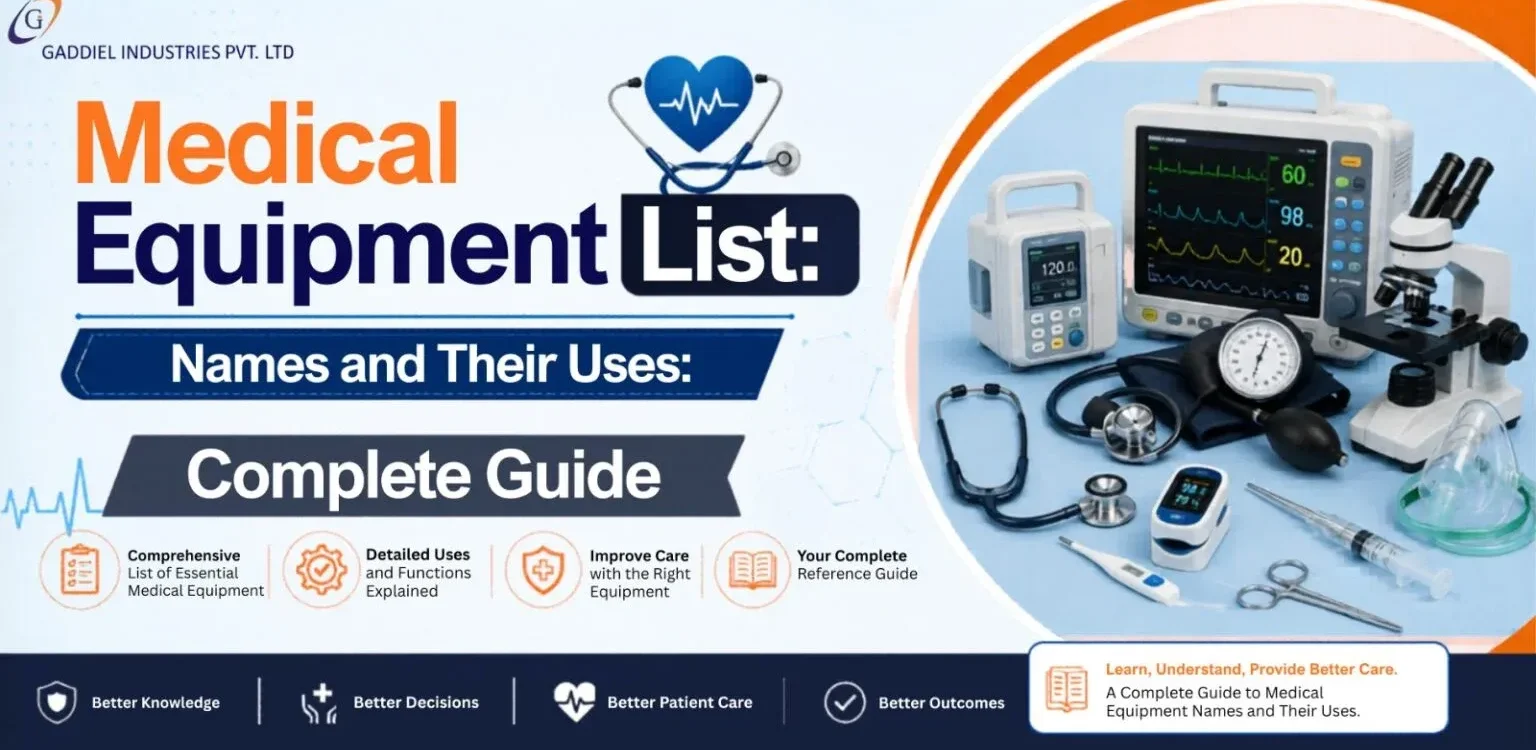
Technologies and precision tools go hand in glove with modern health care. And whether it be an ordinary check-up or major operation, all medical processes are reliant on proper devices. A comprehensive medical equipment list for hospital owners, healthcare professionals and anyone planning to set up a medical retail shop is crucial in offering the delivery of effective and safe care with the help of medical equipment names with uses.
What Does Medical Equipment Mean?
Medical devices, including modular OT equipment, are instruments, apparatuses, or machines used for diagnosing, treating, and monitoring patients with medical conditions. These tools help healthcare professionals make accurate decisions, reduce risks, and improve patient outcomes.
Medical equipment list can be classified by function: basic, diagnostic, surgical, life-support, or advanced equipment.
Medical Equipment List for Hospitals or Clinics –
These are the basic medical equipment list that represent primary health care:
- Listening Device (Stethoscope) –
Doctors use this instrument to listen to sounds made by organs inside the body, such as the heart and how it beats, air flowing through our lungs — that is, breathing.
- Temperature Checker (Thermometer)
Monitors body temperature in order to detect fever.
- Blood Pressure Measuring Device
It can be employed to keep track of blood pressure levels and hypertension.
- Oxygen Level Monitor
This device studies how much oxygen the blood has.
- Blood Sugar Testing Device
Applicable for diabetes patients to test glucose levels. A blood sugar testing device assists monitor glucose levels quickly and accurately for effective diabetes management.
- Radiography Machine
Uses x-rays to take images of bones and internal body structures. Radiography machines provide high-quality diagnostic imaging, enabling accurate detection and monitoring of medical conditions.
- Sonography System
A method that uses audible sound waves to create pictures of the organs, often used during pregnancy.
- Heart Activity Recorder
Monitors heart’s electrical signals to identify irregularities. A Heart Activity Recorder (Cardiac Event Recorder) monitors and records heart rhythms, helping doctors detect cardiac issues accurately.
- Advanced Scanning System (CT)
Provides layered images of the body to see in detail.
- Magnetic Imaging Machine
Provides beautiful images of tissues and organs, free of radiation
- Surgical Equipment and Their Functions
Surgical instruments are meant to facilitate precision and control during operations:
- Surgical Blade
Instrument used for making surgical cuts or incisions.
- Grasping Tool (Forceps)
Used for retaining tissues or surgical instruments in position.
- Tissue Retractor
Exposes surgical fields for improved visibility
- Stitching Material (Sutures)
Surgical dressing, which is used to cover the wound after surgery.
- Operation Table
A platform that is specially designed to place patients during an operation.
Read Also: Minor Operation Theatre vs Major Operation Theatre
Critical Care Equipment for Emergencies –
Such medical equipment list are vital in intensive care units and emergency departments.
- Breathing Support Machine
Assists patients with breathing if they cannot breathe normally.
- Cardiac Shock Device
It was carried out to rectify erratic beatings of the heart witnessed during emergencies.
- Fluid Delivery Pump
Allows more controlled delivery of medicines and fluids.
- Vital Signs Monitor
Monitor heart rate, oxygen level and blood pressure at normal intervals.
- Fluid Removal Device
During the process, it clears out fluids that one may not want in their body.
Supportive Medical Equipment List in Hospitals –
Support tools enhance patient comfort and hospital workflow:
- Adjustable Patient Bed
Allows for convenience and comfort during treatment.
- Mobility Chair
Helps patients around the facility.
- Drip Stand
Holds IV fluids during treatment.
- Patient Transport Trolley
Made to transfer patients, safely, between departments
- Storage Unit
Organizes and houses important items and medical supplies.
High-Tech Medical Equipment
Modern-day technologies used by advanced healthcare facilities:
- Kidney Support Machine – Allows patients to lose organs that can sift through sludge from their blood.
- Internal Viewing Device – Enables doctors to observe the inner workings of organs without invasive surgery.
- Precision Laser Tool – Used in surgical procedures because they are precise, and limit damage.
- Robotic-Assisted Surgery System – Helps surgeons to carefully perform delicate procedures with extreme precision
- Remote Monitoring Technology – Allows physicians to remotely monitor the health of patients.
Why Medical Equipment is Essential?
Medical equipment supports medically crucial for:
- Early disease detection
- Accurate diagnosis
- Effective treatment planning
- Continuous patient monitoring
- Emergency life-saving interventions
No modern healthcare can be possible without these tools.
Tips for Selecting Medical Equipment
For establishing a hospital or clinic should take note on these aspects of the medical equipment list:
- Choose certified and reliable products
- Ensure easy operation for staff
- Check the availability of maintenance services
- Upgrade and modernize your technology
- The right choice means better performance and patient trust.
The Future of Medical Equipment
In terms of smart solutions, the healthcare industry is again heading in a particular direction and focusing on the following:
- AI-powered diagnostic systems
- Wearable health monitoring devices
- Portable and compact machines
- Surgeries and becoming unwell provide the opportunity for automation
These developments are streamlining the healthcare system, making it faster, safer and more affordable.
Read Related – Operation Theatre Technician: Learn Operation Theatre Technology
Conclusion
Any healthcare facility will require an in-depth knowledge of the medical equipment list with specific medical equipment names and their uses. These devices, either simpler or sophisticated will smoothen the hospital operations and help have better patient care.
Medical technology is slowly growing and if it continues to grow, then having the right sort of equipment will still play an important role in delivering high and reliable quality healthcare services.
FAQs
What does a medical equipment list contain?
Includes diagnostic tools, surgical instruments, monitoring devices and other support equipment.
Where equipment is most vital during an emergency?
These include machines for breathing support, cardiac shock devices alongside vital monitors.
Why is diagnostic equipment important?
It accurately provides early diagnosis of diseases. If it is to be used for an extended period, regular servicing and careful handling will be needed.
What are advanced medical devices?
Also includes high-tech machines like imaging equipment and robotic systems.