

Medical Gas Pipeline System (MGPS) for Hospitals
- Home
- Medical Gas Pipeline System
What Is MGPS (Medical Gas Pipeline System)?
MGPS stands for Medical Gas Pipeline System: a fixed network of copper pipes, valves, alarms and outlets that carries medical oxygen, nitrous oxide, medical air and vacuum from a central source to every bed, operation theatre and ICU in a hospital.
Medical Gas Pipeline System (MGPS) is a crucial service in healthcare facilities, ensuring a safe, reliable and continuous supply of medical gases such as Oxygen, Nitrous Oxide, Medical Air, and Vacuum. This system eliminates the need for bulky gas cylinders at patient Bedside, reducing logistical challenges and enhancing patient safety.
The Medical Gas Pipeline System is designed in compliance with HTM 02-01, NFPA, and ISO standards, featuring high-quality pipelines, isolation valves, area gas alarms, and gas outlets strategically installed in modular OT setups, operation theaters, ICUs, and patient wards. It plays a vital role in life-supporting treatments, anaesthesia delivery, respiratory therapies, and other critical medical procedures.
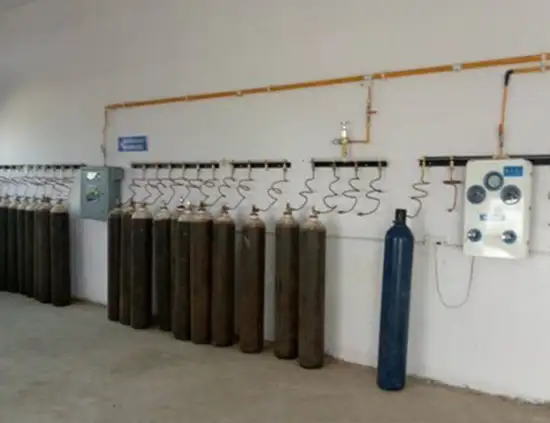
Medical Gas Pipeline System with Safety and Performance
Medical Gas Pipeline System (MGPS) is an essential service of any ultra-modern healthcare infrastructure, responsible for safe and uninterrupted delivery of medical gases to the different departments. Delivering gases such as oxygen, nitrous oxide and medical air to the point of use, this system is integral for patient care from intensive care units to operation theatres.
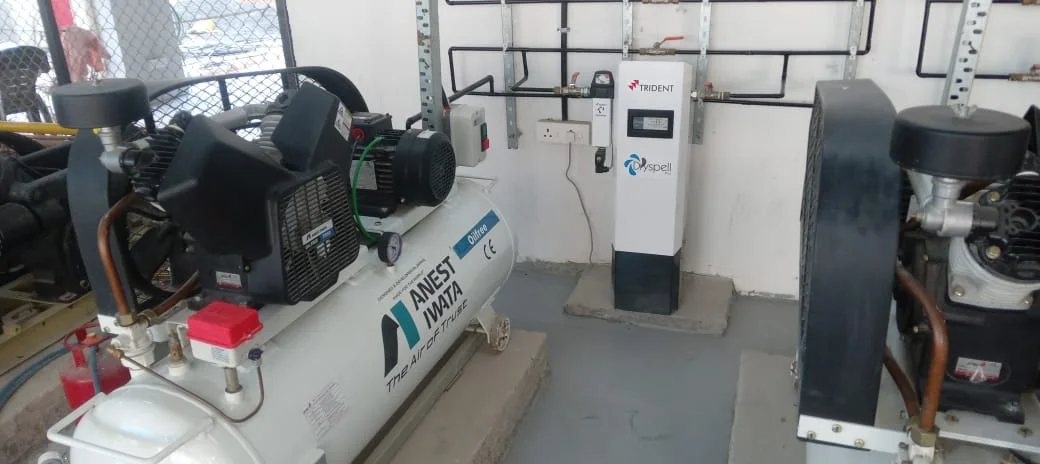
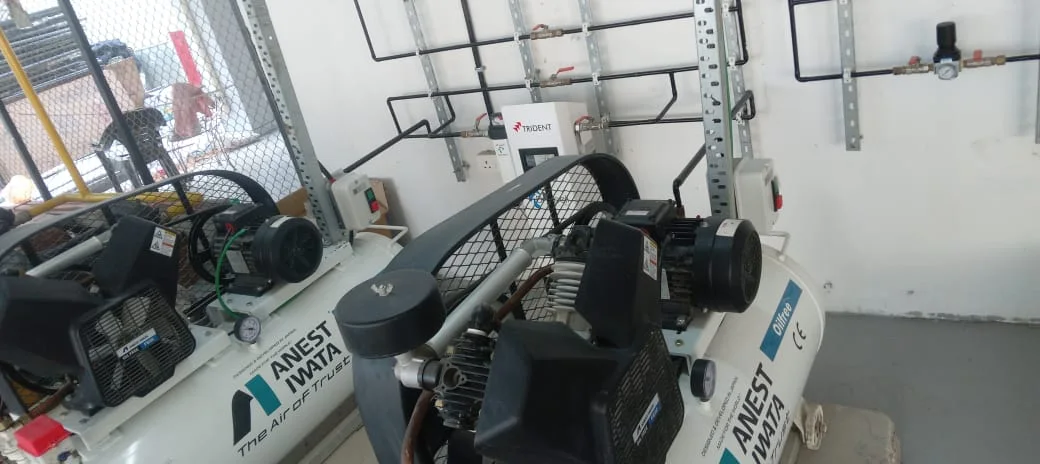
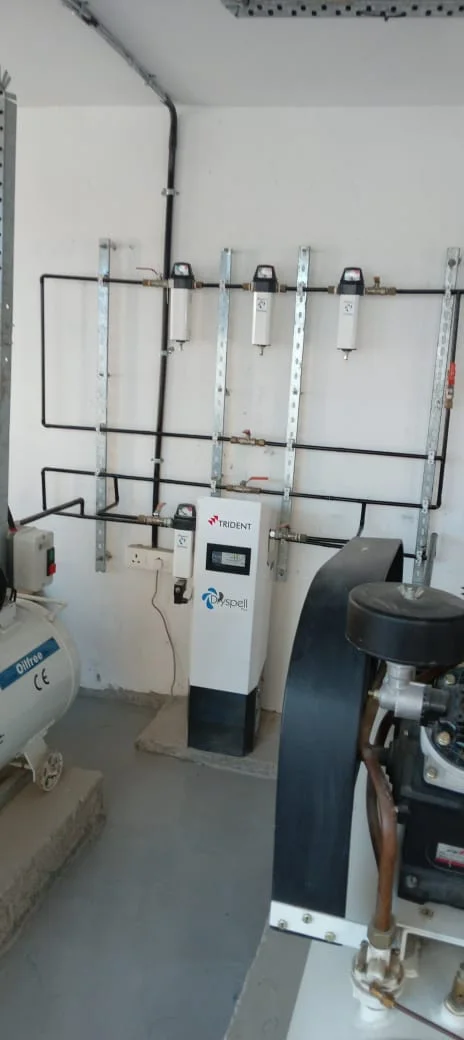
Our Recent MGPS Installations
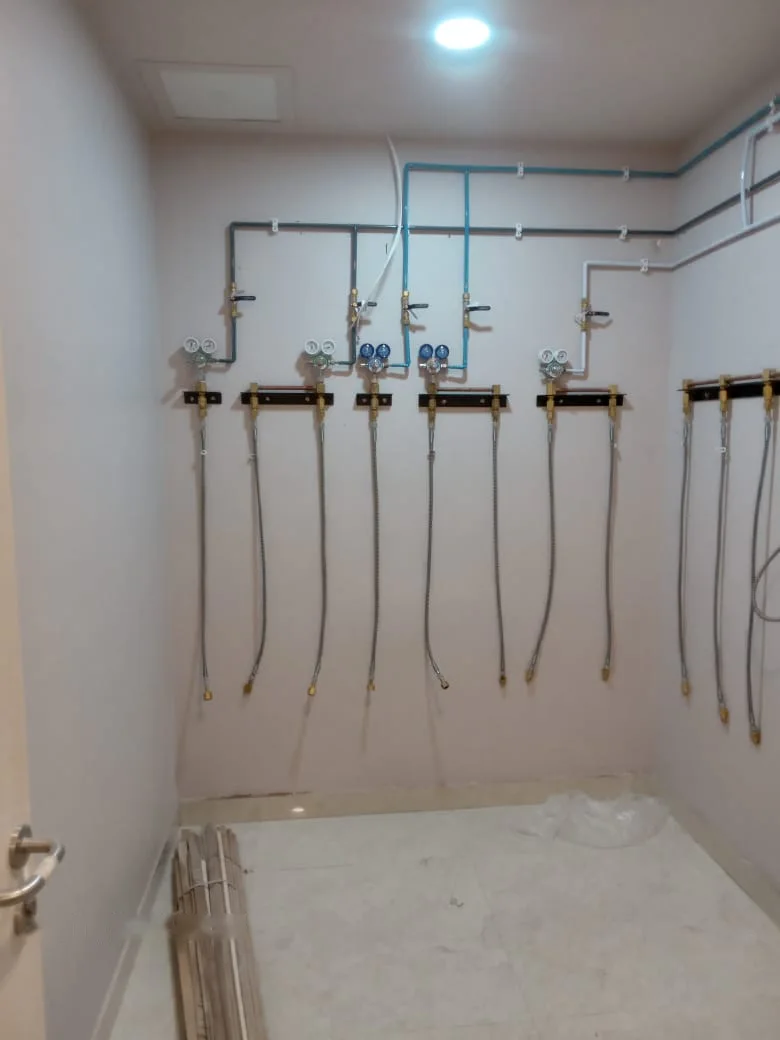
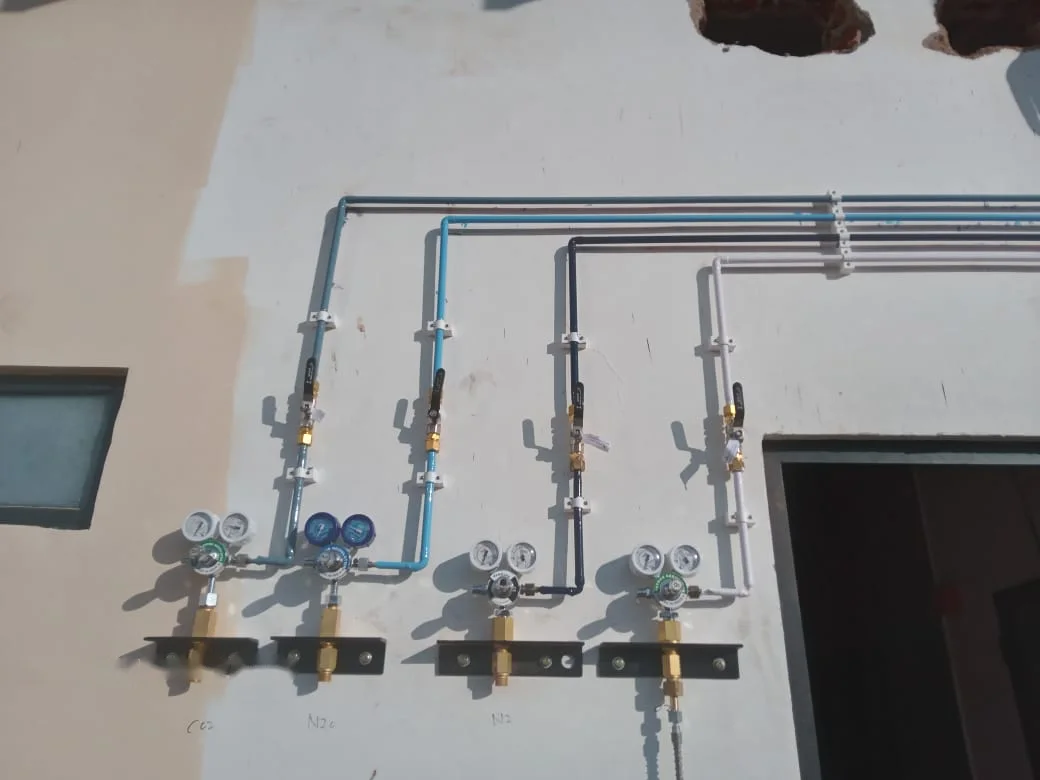
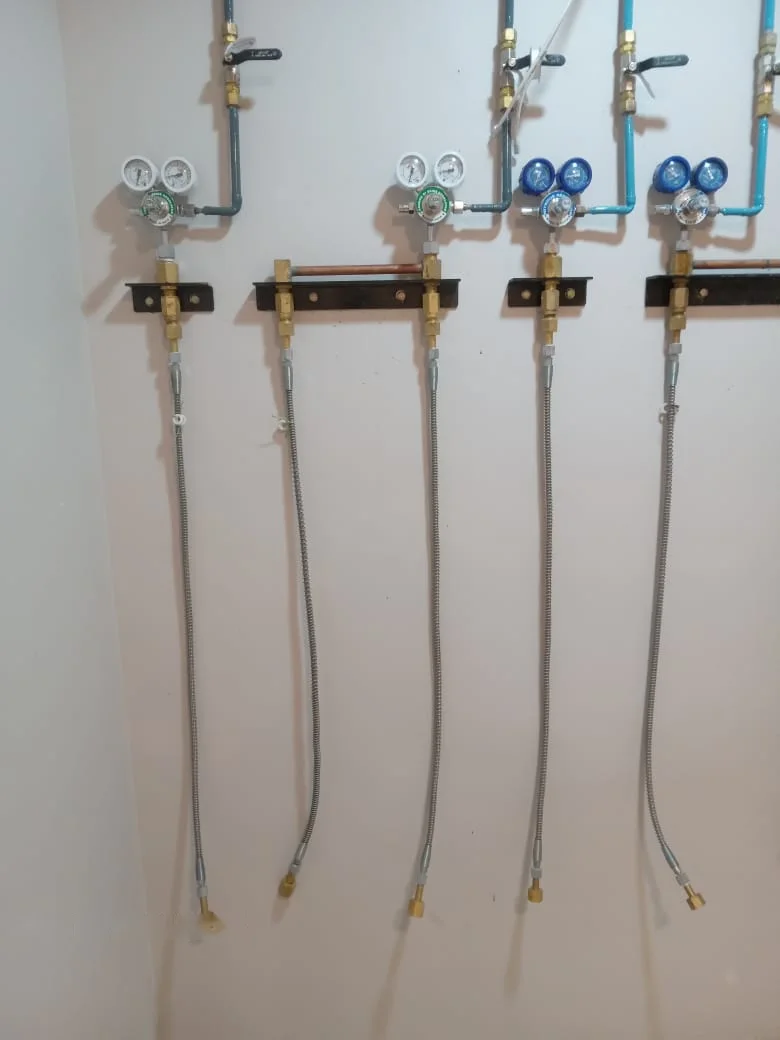
Manifold rooms, copper pipelines and medical air plants recently installed by Gaddiel for our hospital clients.
MGPS Explained in 60 Seconds
Components of Medical Gas Pipeline System
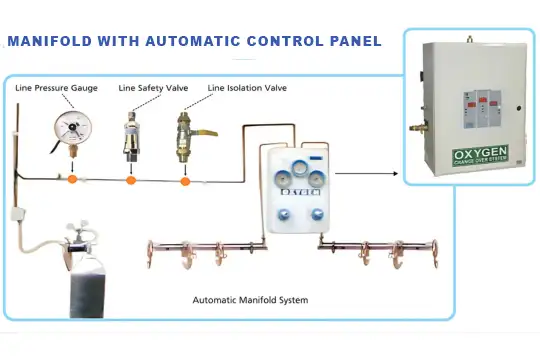
AUTOMATIC MANIFOLD CONTROL PANEL

SEMI AUTOMATIC MANIFOLD CONTROL PANEL
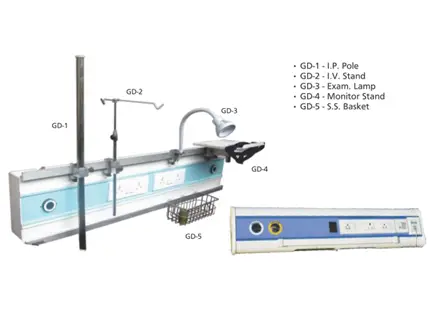
HORIZONTAL BED HEAD PANEL
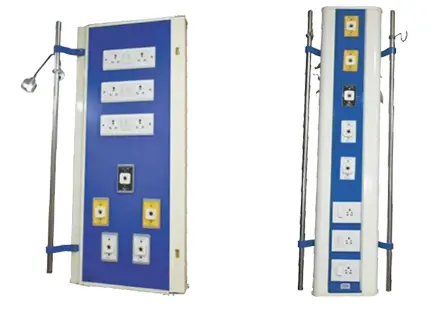
VERTICAL BED HEAD PANEL
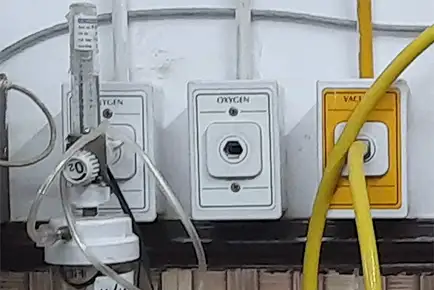
MEDICAL GAS OUTLETS

Analog Area Gas Alarm

Digital Area Gas Alarm

ZONAL VALVE BOX
The Zonal Valve Box are fully designed to suit multiple operational and requirement and ensure considering space for mounting. The Configurations of valve boxes are described.services – O,, N,O, Air, Vacuum (15, 15, 15,22 mm)3 services – O,, Air, Vacuum (15, 15, 22mm)2 services-O,, Vacuum (15, 22mm)5 services – O,, N,O, Air 4 Bar, Air 7 Bar, Vacuum6 services – O,, N,O, Air 4 Bar, Air 7 Bar, Co, Vacuum

BPC FLOW METER
Black Pressure componsated flow meter made with chrome plated brass body. Graduated flow tube and cover made of polycarbonate, & unbreakable. Adujustable flow by needle valve (know) with micrometrical regulation. Humidifier bottle is made of unbreakble polycarbonate material and is autoclavable.

THEATRE SUCTION TROLLEY
The unit illustrated incorporates a vacuum regulator with vacuum gauge. (0-760 MM/HG). Two suction jars of 2000 ml capacity each (4000ml). A three way valve which allows use of either or both suction jars. The rugged structure is made of mild steel & fibre glass to forbear hard usage, & for attractive clinical appearance.Branches chasis is provided with castors for easy mobility.

PIPELINE ISOLATION VALVE
ISOLATION BALL VALVE COPPER PIPE & FITTING PLASTIC SADDLES All Copper pipe made of phosphorous de-oxide, non arsenical copper as per BS 2871, Part 1, GD-VB-12 Table X (BS En1057)

Medical Gas Pipeline System Explained
A medical gas pipeline system is a centralised piping network that delivers medical gases economically from the source to various areas in the hospital. This means there are no more individual gas cylinders at each location, saving on safety and convenience while guaranteeing supply. Wondering what the abbreviation stands for? Read our guide to the MGPS full form and how it is used in hospitals.
How MGPS Works: From Gas Source to Bedside Outlet
Gas Source Equipment
Comprises oxygen cylinders, liquid oxygen tanks or gas manifolds which is the main source.
Pipeline Network
According to the pending patent application, separate gas pipelines (typically made of seamless medical-grade copper) carry gases throughout various areas of a hospital.
Control Panels and Valves
Control pressure and flow, delivering gases safely.
Terminal Units (Outlets)
Installed at patient bedsides or operation rooms and allows for easy access to gases.
Alarm Systems
Keep an eye on pressure levels and inform the staff if there is a fault in the system or abnormal behaviour.
Vacuum System
It is utilized in suction treatment, including surgery and emergencies.
A medical gas pipeline system is a crucial part of modern healthcare facilities, designed to deliver lifesaving gases safely, efficiently, and continuously to areas where patients receive care. By swapping out individual gas cylinders for a centralized supply, this system guarantees a steady flow of Oxygen, Medical Air, Vacuum, Nitrous Oxide, and CO₂ to ICUs, operating theaters, and emergency rooms.
Safety and Design Features of MGPS
- Central Gas Supply Units that ensure constant availability
- High-quality copper pipelines for precise distribution
- Zone valve boxes that allow for safe isolation during maintenance
- Terminal outlets are strategically placed at critical care points
- Alarm and monitoring panels for real-time pressure and safety checks
Benefits of Installing a Medical Gas Pipeline System
- Continuous and reliable gas flow for patient treatment
- Enhanced safety with automated alerts and regulated pressure
- Reduced handling and storage issues associated with gas cylinders, minimizing operational risks
- Compliance with global healthcare standards and safety regulations
- Improved workflow and optimized space in medical environments
Where MGPS Is Used
- Hospitals and Multi-Specialty Clinics
- Surgical and Emergency Units
- Diagnostic and Dental Centers
Types of Medical Gases Used
You can handle all this the way you used to live it, fuelling (or not) your car with: Oxygen (O₂) – Required for respiration
- Nitrous Oxide (N₂O) – Commonly used as an anesthetic agent
- Medical Air — Provides respiratory & medical equipment support
- Carbon dioxide (CO₂) – Used in surgeries
- Vacuum – This is to suck things up and pull from fluid
A well-designed medical gas pipeline system is essential for ensuring safety, efficiency, and reliability, making it a vital component of any healthcare facility.
MGPS Colour Coding: How Each Gas Is Identified
Every MGPS pipe, outlet and hose is marked so that one gas can never be connected to another. Pipelines are labelled with the gas name and colour bands, and each gas has its own outlet shape (non-interchangeable).
| Gas | Symbol | Identification colour |
|---|---|---|
| Oxygen | O2 | White |
| Nitrous oxide | N2O | Blue |
| Medical air (4 bar) | AIR | Black and white |
| Surgical air (7 bar) | AIR-800 | Black and white |
| Vacuum | VAC | Yellow |
| Carbon dioxide | CO2 | Grey |
| Nitrogen | N2 | Black |
| Oxygen / nitrous oxide mix (Entonox) | O2/N2O | Blue and white |
Looking for hospital emergency colour codes (Code Red, Code Blue)? See our guide to emergency codes in hospital as per NABH.
Upgrade your healthcare facility with advanced Medical Gas Pipeline Systems designed for safety, efficiency, and compliance. Our solutions ensure uninterrupted delivery of essential gases like oxygen, nitrous oxide, and compressed air across critical areas.
As trusted modular OT manufacturers, we also integrate essential technologies like a queue management system and nurse call system to enhance workflow, communication, and patient care.
Built to meet NABH and international standards, these systems minimize operational risks. Whether setting up a new hospital or upgrading existing infrastructure, our customizable solutions offer reliability, easy maintenance, and long-term performance for seamless healthcare operations.
Key Features of MGPS
Continuous Gas Supply
High Safety Standards
Corrosion-Resistant Materials
Centralized Monitoring
Easy Maintenance
Advantages of MGPS for Hospital Operations
Improved Patient Care
Enhanced Safety
Operational Efficiency
Cost-Effective in the Long Run
Space Optimization

Applications of MGPS by Department
- Operation theatres
- Intensive Care Units (ICUs)
- Emergency Rooms
- General Wards
- Neonatal Care Units
- Diagnostic and Laboratory Areas
How to Choose the Right MGPS?
- Compliance with standards (HTM or NFPA)
- Quality of Materials (medical-grade copper pipelines)
- Features for Safety (alarm systems and pressure regulators)
- Ease of Maintenance
- Expert Installation Support
The Importance of MGPS in Today's Healthcare

MGPS Projects Successfully Completed
Selected hospitals where Gaddiel has designed and installed medical gas pipeline systems – from complete MGPS with modular OTs to oxygen pipelines for government hospitals. See all projects on our Clients page.
| Hospital | Location | Work completed | Year |
|---|---|---|---|
| Indira IVF Hospital | Amritsar, Punjab | 2 complete Modular OTs, IVF Lab, complete MGPS & Nurse Call System | Aug 2025 |
| Jeewan Mala Hospital | Rohtak Road, Delhi | 2 Modular OTs, complete MGPS, Nurse Call System, Wall & Corner Guards | Apr 2025 |
| Apollo Spectra | Jaipur, Rajasthan | 4 complete Modular OTs & complete MGPS | Mar 2024 |
| Apollo Cradle & Children Hospital | Rajaji Nagar, Bengaluru | 2 complete Modular OTs & complete MGPS | Jun 2023 |
| Apollo Spectra | Chirag Enclave, New Delhi | 4 complete Modular OTs & complete MGPS | May 2023 |
| Apollo Spectra | Pusa Road, Delhi | 4 complete Modular OTs & complete MGPS | Feb 2023 |
| Birla Fertility | Patna, Bihar | Complete MGPS, laminar flow, hatch boxes, OT doors, differential pressure gauges & scrub station | 2022 |
| Lal Bahadur Shastri Hospital | Ram Nagar, Varanasi, U.P. | Oxygen gas pipeline system for 158 beds | 2021 |
| Apollo Fertility | GS Road, Guwahati, Assam | 3 complete Modular OTs & complete MGPS | Jul 2021 |
| Apollo Fertility | Kondapur, Hyderabad, Telangana | 3 complete Modular OTs & complete MGPS | Dec 2020 |
| Jeewan Jyoti Hospital | Bahadurgarh, Haryana | MGPS for 28 beds with automatic control panel | 2020 |
| Jeewan Anmol Hospital | Mayur Vihar Phase I, Delhi | MGPS for 30 beds; ongoing MGPS supplies | — |
| Trauma Centres (Raniganj, Patti & Lalganj) | Pratapgarh, U.P. | Oxygen gas pipeline systems for 50, 50 & 35 beds | — |
| CHC Sitarganj | Sitarganj, Uttarakhand | Oxygen gas pipeline system for 40 beds | — |
| Indira IVF Hospitals | Jammu, Hisar, Varanasi, Kanpur, Lucknow, Chennai & more | Complete MGPS with modular OTs | — |
Download the MGPS & Modular OT Catalogue
Get the catalogue and tender-ready specifications for your BOQ. Fill in a short form and the file opens instantly.
End-to-End Medical Gas Pipeline System Services
We can help you with:
- MGPS design reviews and gap assessments.
- Detailed BOQs and quotations for new hospitals and expansions
- Oxygen, medical air, vacuum and AGSS plant selection
- Installation, testing, commissioning and documentation
- Upgrades of existing systems for ICU, HDU and high-flow oxygen demand
Frequently Asked Questions
What gases are used in MGPS?
So why is copper used in the pipelines?
Is MGPS safe for hospitals?
Where is MGPS used?
Does it reduce operational costs?
Why is a gas pipeline system important in hospitals?
Which medical gases are supplied through the pipeline system?
Where is the medical gas pipeline system used in hospitals?
It is used in ICUs, operation theaters, emergency rooms, patient wards, and neonatal care units.
Can MGPS replace gas cylinders in hospitals?
Yes, MGPS reduces dependence on cylinders by providing a centralized and uninterrupted gas supply, enhancing efficiency and safety.
How often should the medical gas pipeline system be maintained?
Regular inspections, leak tests, and preventive maintenance are required to ensure the system operates safely and efficiently.
What oxygen flow should be allowed per ICU bed?
The HTM uses 60 L/min per bed space per circuit where high-flow ventilation is expected, and 10 L/min where it is not. Each outlet should be able to pass 100 L/min.
What are the three sources of supply?
Primary (the main supply), secondary (automatic backup) and tertiary (emergency reserve). All three should be planned for every gas through risk assessment.
What tests are needed before handover?
Pressure and leak tests, particulate tests at every outlet, cross-connection tests, flow performance tests, alarm tests and gas quality tests. Every component is tested, and results are recorded on B-forms.
What oxygen purity is required at the outlet?
At least 99.5% for liquid or cylinder oxygen, and at least 94% for PSA oxygen, along with limits on moisture, CO, CO2 and particles.
Which hospitals have Gaddiel installed MGPS for?
We have installed medical gas pipeline systems for Apollo Spectra, Apollo Cradle, Apollo Fertility, Indira IVF hospitals across North and South India, Birla Fertility Patna, Jeewan Jyoti Hospital Bahadurgarh, Jeewan Anmol Hospital Delhi and Lal Bahadur Shastri Hospital, Varanasi (158-bed oxygen pipeline). See the project list on this page.
Do you install oxygen pipelines for government hospitals and trauma centres?
Yes. Gaddiel has installed oxygen gas pipeline systems for government facilities such as trauma centres in Pratapgarh (U.P.), CHC Sitarganj (Uttarakhand) and Lal Bahadur Shastri Hospital, Varanasi.
Can MGPS be installed in a running hospital?
Yes. We plan the work floor by floor, keep the existing cylinder supply running, and connect each area only after pressure testing, so patient care is not interrupted.
Which standards does your MGPS design follow?
Our MGPS designs follow internationally recognised guidance such as HTM 02-01 and ISO 7396-1, and meet NABH requirements for hospitals in India.
Do you supply MGPS components separately?
Yes. Along with complete systems, we supply gas outlets, manifolds, area valve service units, zone valve boxes, medical gas alarms and bed head panels for hospitals that need upgrades or spares.
How much does MGPS installation cost for a hospital?
There is no fixed per-bed rate. Cost depends on the number of beds and outlets, the gases required, the oxygen source (cylinder manifold, liquid oxygen tank or PSA plant), pipe length and the alarm system. See our guide to MGPS installation cost and planning, or share your floor plan for an itemised quotation.
Do I need a PESO licence for a liquid oxygen tank?
Yes. Storing liquid medical oxygen in a cryogenic tank needs a licence from PESO (Petroleum and Explosives Safety Organisation), so the tank location should be planned early with your MGPS supplier.
What is a zone valve box in MGPS?
A zone valve box (AVSU) is a set of isolation valves for each gas, mounted in a glass-fronted box at the entry to a ward, ICU or OT. Staff can shut off gas to one area in an emergency or for maintenance without affecting the rest of the hospital.
What alarms are used in a medical gas pipeline system?
An MGPS uses area alarm panels outside each department to warn of high or low pipeline pressure, and a master alarm at the nurse station or engineering room that shows plant faults, low cylinder or tank levels and changeover to reserve supply.
What is the full form of MGPS?
MGPS stands for Medical Gas Pipeline System: the piped network that carries medical oxygen, nitrous oxide, medical air and vacuum from a central source to every bed, operation theatre and ICU.
What colour is the oxygen pipeline?
Oxygen is identified by white, with the gas name labelled on the pipe and outlets. See the MGPS colour coding table on this page for the other gases.